
Facing foreclosure can feel overwhelming, but homeowners have multiple ways to avoid foreclosure and protect their financial future. With California’s specific foreclosure laws and timelines, understanding your options is crucial for making informed decisions. Quick cash sales offer one of the fastest solutions to stop foreclosure, often closing in just 7-14 days compared to the state’s 120-day foreclosure process.
Stop Foreclosure Today – Get Your Cash Offer
Don’t wait until it’s too late. First Choice Home Sale can close in days, not months, protecting your credit and preserving your equity. Get your no-obligation cash offer now.
Call (866) 643-5829 for immediate assistance
Key Takeaways
- California’s non-judicial foreclosure process typically takes 120+ days from first missed payment to trustee sale
- Early intervention within the first 90 days provides the most foreclosure prevention options
- Cash sales can close in 7-14 days, immediately stopping the foreclosure process upon contract acceptance
- California’s Homeowner Bill of Rights provides significant protections including dual tracking prohibition
- Quick cash sales preserve remaining equity while traditional foreclosure eliminates all homeowner equity
- Credit score damage from foreclosure (200-300+ points) far exceeds impact from strategic cash sale
Understanding Foreclosure in California
California uses primarily non-judicial foreclosure through trustee sales, taking an average of 120-150 days from first missed payment to completed sale, with specific homeowner protections under state law.
California’s foreclosure system operates differently from many other states, utilizing predominantly non-judicial foreclosure procedures. This process allows lenders to foreclose without court involvement, making it faster but still providing homeowner protections. According to the California Courts Self-Help Center, approximately 95% of California foreclosures use the non-judicial process.
The state’s foreclosure timeline begins when homeowners fall behind on mortgage payments, triggering a series of required legal notices. Unlike judicial foreclosures that require court approval, non-judicial foreclosures follow a statutory timeline with specific notice requirements and waiting periods.
According to RealtyTrac data, California processed over 18,000 foreclosure filings in 2023, representing a 15% decrease from the previous year, with the average foreclosure timeline extending 147 days from initial filing to completion.
California law provides significant homeowner protections through the Homeowner Bill of Rights, including prohibition of dual tracking (pursuing foreclosure while reviewing loan modifications) and requiring lenders to provide a single point of contact. These protections create opportunities for homeowners to explore alternatives before losing their homes.

Foreclosure Process Timeline
Understanding California’s foreclosure timeline helps homeowners identify critical intervention points. The process begins 30 days after a missed payment when lenders typically send the first payment demand notice. If payments remain delinquent, lenders can file a Notice of Default (NOD) after 90 days of non-payment.
| Timeline Stage | Non-Judicial Process | Judicial Process | Homeowner Actions Available |
|---|---|---|---|
| Days 1-30 | Payment demand notices | Payment demand notices | Contact lender, seek modification |
| Days 31-120 | Notice of Default filing | Lawsuit filing | Reinstatement, modification, sale |
| Days 121-141 | Notice of Trustee Sale | Court judgment | Reinstatement, emergency sale |
| Day 142+ | Trustee sale auction | Sheriff sale auction | Redemption period (judicial only) |
The non-judicial process moves faster than judicial foreclosure, completing in approximately 120-150 days versus 180-300 days for court-supervised cases. However, non-judicial foreclosures offer no post-sale redemption period, making pre-sale intervention crucial for homeowners wanting to preserve equity.
Notice of Default (NOD)
The Notice of Default represents the formal beginning of California’s foreclosure process, filed with the county recorder’s office after 90+ days of payment delinquency. The NOD provides homeowners with a 90-day cure period to bring their loan current and stop foreclosure proceedings.
During this 90-day period, homeowners retain the right of reinstatement by paying all delinquent amounts plus fees and costs. The reinstatement amount typically includes missed payments, late fees, property taxes, insurance premiums, and lender’s costs for filing the NOD.
The NOD must contain specific information including the loan balance, amount needed to cure the default, and the property description. It’s recorded publicly, making foreclosure proceedings visible to credit agencies and potential buyers. This public recording immediately impacts credit scores, typically dropping them by 50-100 points.
Notice of Trustee Sale
The Notice of Trustee Sale represents the final stage before foreclosure auction, filed after the 90-day NOD period expires without resolution. This notice must be posted on the property, published in local newspapers, and recorded with the county recorder at least 21 days before the scheduled sale date.
The notice includes the sale date, time, location, and property description. Once filed, homeowners lose the right of reinstatement and can only stop foreclosure by paying the entire loan balance (redemption) or completing an immediate sale that satisfies the debt.
At the trustee sale, the property is auctioned to the highest bidder, with the lender often bidding the outstanding loan balance. If no higher bids are received, the lender takes ownership through a trustee’s deed, and the homeowner must vacate the property.
Early Warning Signs
Early foreclosure warning signs include missed mortgage payments, job loss, medical expenses, divorce, adjustable rate increases, and falling behind on property taxes or HOA dues before formal notices begin.
Recognizing early warning signs of potential foreclosure allows homeowners to take proactive steps before the formal foreclosure process begins. These indicators often appear months before missing the first mortgage payment, providing valuable time to implement prevention strategies.
Financial stress typically builds gradually, making it important to monitor household budgets and cash flow regularly. According to the Federal Reserve’s Report on Economic Well-Being, approximately 37% of Americans would struggle to cover a $400 emergency expense, indicating widespread financial vulnerability.
Early intervention significantly improves outcomes, with homeowners having more options and negotiating power before falling into default. Lenders are also more willing to work with homeowners who communicate proactively rather than waiting until formal foreclosure proceedings begin.

Missing Mortgage Payments
The progression from one missed payment to foreclosure follows a predictable pattern. The first missed payment triggers late fees and phone calls from the lender’s customer service department, while the second missed payment escalates to more serious collection efforts.
| Missed Payments | Timeline | Lender Actions | Credit Impact |
|---|---|---|---|
| 1 Payment | 30 days late | Late fees, customer service calls | 30-day late mark on credit |
| 2 Payments | 60 days late | Collection calls, demand letters | 60-day late mark, score drops |
| 3 Payments | 90 days late | Loss mitigation referral | 90-day late mark, significant drop |
| 4 Payments | 120 days late | NOD filing preparation | Continued deterioration |
After three missed payments, most lenders begin formal foreclosure proceedings by filing a Notice of Default. The key is understanding that each missed payment increases the difficulty and cost of bringing the loan current.
Financial Hardship Indicators
Several financial indicators often precede mortgage payment difficulties. Debt-to-income ratio increases signal growing financial stress, particularly when housing payments exceed 31% of gross monthly income or total debt payments exceed 43%.
Credit utilization increases often indicate financial strain, especially when homeowners begin using credit cards for essential expenses like groceries, utilities, or medical bills. High credit utilization (above 30% of available limits) suggests insufficient cash flow to meet monthly obligations.
Emergency fund depletion represents a critical warning sign, as homeowners lose their financial safety net for unexpected expenses. Without emergency savings, any disruption in income or unexpected expense can immediately threaten mortgage payment ability.
Communication from Lender
Lender communication patterns change as accounts become delinquent, progressing from routine customer service interactions to formal legal notices. Initial communications typically come from customer service representatives offering payment assistance or temporary modifications.
As delinquency continues, communications escalate to loss mitigation departments that specialize in workout options and foreclosure alternatives. These departments have more authority to approve modifications, forbearance agreements, and other loss prevention measures.
Formal legal notices represent the final stage of lender communication before foreclosure completion. By this point, homeowners have limited options and must act quickly to preserve their rights and equity in the property.
Foreclosure Prevention Strategies
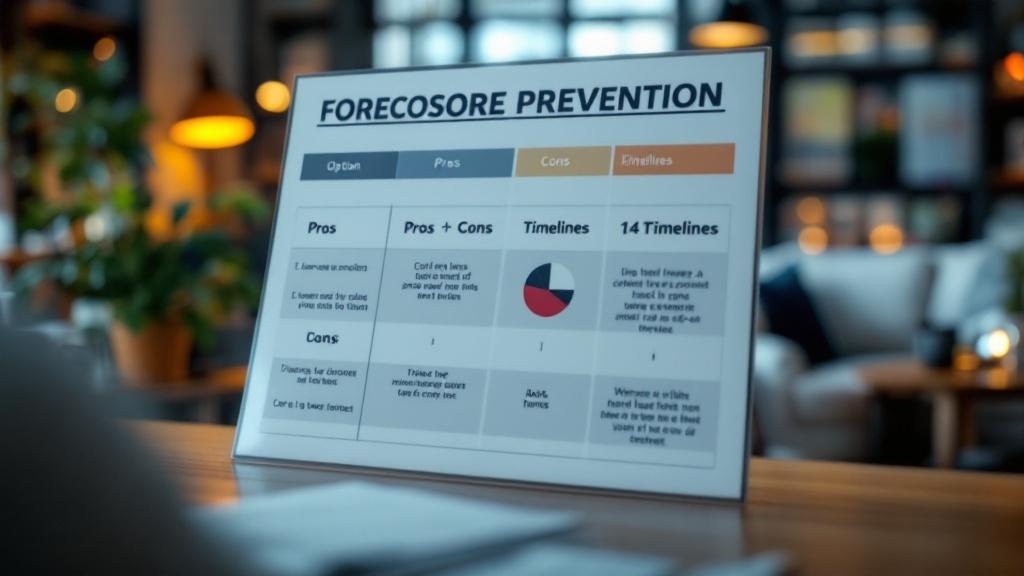
Effective foreclosure prevention strategies include loan modifications, forbearance agreements, short sales, quick cash sales, refinancing, and bankruptcy protection, each with specific qualification requirements, timelines, and outcomes for homeowners.
Homeowners facing foreclosure have multiple prevention strategies available, each with distinct advantages, requirements, and timelines. The key to successful foreclosure prevention lies in choosing the right strategy based on individual circumstances and acting quickly before options become limited.
According to HOPE NOW Alliance data, approximately 1.2 million homeowners received foreclosure prevention assistance in 2023, with loan modifications representing 45% of completed actions, short sales accounting for 25%, and other alternatives making up the remainder.
Early action improves success rates for all prevention strategies. Homeowners who engage with lenders or seek assistance before missing payments have significantly more options and negotiating power than those who wait until formal foreclosure proceedings begin.
Loan Modification Options
Loan modifications permanently change mortgage terms to make payments affordable for struggling homeowners. These modifications can include interest rate reductions, term extensions, principal forbearance, or converting adjustable rates to fixed rates, depending on investor guidelines and homeowner qualifications.
The Home Affordable Modification Program (HAMP) established industry standards for modification evaluations, requiring lenders to consider homeowners for modifications before proceeding with foreclosure. While HAMP expired, most lenders continue using similar qualification criteria and evaluation processes.
Typical modification terms include reducing interest rates to as low as 2%, extending loan terms to 40 years, and forbearing principal to achieve target payment ratios. The goal is creating sustainable payments at or below 31% of the homeowner’s gross monthly income.
Qualification requirements typically include demonstrating financial hardship, providing complete financial documentation, and showing ability to make modified payments. The application process can take 60-90 days, during which many lenders suspend foreclosure proceedings.
Short Sale Process
Short sales allow homeowners to sell properties for less than the outstanding mortgage balance with lender approval, avoiding foreclosure while minimizing credit damage. The process requires lender agreement to accept the sale proceeds as full satisfaction of the debt.
California’s anti-deficiency laws provide significant protection for homeowners pursuing short sales, particularly for purchase money mortgages on primary residences. These laws generally prevent lenders from seeking deficiency judgments after short sale completion.
The short sale process typically takes 60-120 days from listing to closing, depending on lender response times and buyer financing. Required documentation includes hardship letters, financial statements, tax returns, bank statements, and listing agreements with qualified real estate agents.
Short sale approval rates have improved significantly, with many lenders now providing pre-approval programs and streamlined processes. However, homeowners must continue making payments during the process or risk foreclosure resumption.
Quick Cash Sale Solution
Quick cash sales provide the fastest foreclosure prevention solution, typically closing in 7-14 days without financing contingencies, repairs, or traditional sale complications. Cash buyers purchase properties in as-is condition, eliminating common delays that plague traditional sales.
The cash sale process begins with homeowners contacting cash buyers for property evaluations and purchase offers. Legitimate cash buyers provide written offers within 24-48 hours based on property condition, location, and current market values.
Cash sales immediately stop foreclosure proceedings upon contract acceptance, as lenders receive notification of the pending sale and upcoming payoff. This immediate protection provides homeowners with certainty and stress relief while preserving remaining equity.
For homeowners in our California foreclosure timeline guide, cash sales offer the most reliable foreclosure prevention method when time is limited and traditional options have been exhausted.
How Cash Sale Prevents Foreclosure
Cash sales prevent foreclosure by providing immediate property sale completion in 7-14 days, stopping foreclosure proceedings upon contract acceptance, preserving homeowner equity, and minimizing long-term credit damage compared to completed foreclosure.
The mechanics of how cash sales prevent foreclosure involve timing, legal notifications, and debt satisfaction that immediately halt the foreclosure process. When homeowners accept a cash offer, the sale contract provides legal documentation that satisfies lender requirements for stopping foreclosure proceedings.
California’s foreclosure process takes an average of 120 days, but First Choice Home Sale can close in 7 days to prevent foreclosure, providing a significant timing advantage. This speed differential allows homeowners to stop foreclosure even when facing imminent trustee sales.
Cash buyers maintain dedicated closing teams and established relationships with title companies, enabling rapid transaction processing. Without financing contingencies, inspection periods, or repair negotiations, cash sales eliminate the common delays that make traditional sales impractical for foreclosure prevention.

Timeline Advantages
The timeline comparison between different foreclosure prevention methods reveals why cash sales often represent the only viable option for homeowners facing imminent foreclosure. Traditional sales require 30-60 days minimum, while foreclosure completion takes 120-180 days total.
| Sale Method | Average Timeline | Success Rate | Foreclosure Prevention |
|---|---|---|---|
| Cash Sale | 7-14 days | 95%+ | Immediate upon contract |
| Traditional Sale | 30-60 days | 65-75% | Upon contract acceptance |
| Short Sale | 60-120 days | 50-60% | Upon lender approval |
| Foreclosure | 120-180 days | 100% loss | No prevention |
Cash sales provide immediate foreclosure prevention upon contract acceptance because lenders receive notification of the pending sale and expected payoff amount. This notification triggers an automatic hold on foreclosure proceedings in most cases.
Credit Score Protection
Foreclosure completion devastates credit scores, typically dropping them 200-300+ points and making future credit approval extremely difficult. The foreclosure notation remains on credit reports for seven years, affecting mortgage, auto loan, and credit card approvals.
Cash sales minimize credit damage by preventing foreclosure completion. While late mortgage payments may have already impacted credit scores, avoiding foreclosure prevents the most severe damage and allows faster credit recovery.
Credit recovery timelines differ significantly between foreclosure and strategic cash sale scenarios. Homeowners who complete cash sales can often qualify for new mortgages within 2-3 years, compared to 3-7 years after foreclosure completion.
Equity Preservation
Foreclosure auctions typically result in properties selling below market value, eliminating homeowner equity entirely. Even when properties have positive equity, foreclosure costs, legal fees, and auction discounts often consume any potential recovery for homeowners.
Cash sales preserve remaining equity by providing market-based purchase prices minus necessary discounts for speed and condition. While cash offers typically range from 70-85% of market value, homeowners retain this equity rather than losing it entirely to foreclosure.
For example, a property worth $500,000 with a $400,000 mortgage balance would provide $100,000 in gross equity. A cash sale at 80% of value ($400,000) would net the homeowner their equity after loan payoff, while foreclosure would typically result in total equity loss.
Preserve Your Equity – Stop Foreclosure Now
Don’t lose your home’s equity to foreclosure. First Choice Home Sale offers fair cash offers and can close in as little as 7 days. Protect your financial future today.
Get your no-obligation cash offer: Call (866) 643-5829
Legal Rights During Foreclosure
California homeowners have significant legal rights during foreclosure including dual tracking prohibition, single point of contact requirements, modification review rights, reinstatement periods, and anti-deficiency judgment protections under state law.
California’s Homeowner Bill of Rights provides comprehensive protections for homeowners facing foreclosure, establishing specific lender obligations and homeowner rights throughout the process. These rights create opportunities for homeowners to explore alternatives and ensure proper procedural compliance.
The legislation emerged from widespread foreclosure abuses during the 2008-2012 housing crisis, when lenders frequently pursued foreclosure while simultaneously reviewing homeowners for loss mitigation options. These conflicting processes, known as “dual tracking,” created confusion and prevented successful workout arrangements.
Understanding these rights empowers homeowners to hold lenders accountable and ensures proper process compliance. Violations of the Homeowner Bill of Rights can provide grounds for challenging foreclosure actions and may result in monetary damages for affected homeowners.

California Homeowner Bill of Rights
The California Homeowner Bill of Rights prohibits dual tracking, requiring lenders to complete loss mitigation reviews before proceeding with foreclosure. This protection ensures homeowners receive full consideration for workout options without simultaneous foreclosure progression.
Single Point of Contact (SPOC) requirements mandate that lenders provide homeowners with dedicated representatives who have complete access to their files and authority to discuss all available options. This eliminates the frustration of dealing with multiple representatives who lack complete information.
Lenders must provide written acknowledgment of complete loan modification applications within five business days and complete their review within 30 days. If applications are denied, lenders must provide specific reasons and information about appeal rights.
Penalty provisions allow homeowners to seek actual damages plus $50,000 in statutory damages for willful violations of the Homeowner Bill of Rights, providing meaningful enforcement mechanisms and lender accountability.
Right to Reinstate
California’s right of reinstatement allows homeowners to stop foreclosure by paying all delinquent amounts plus fees and costs up to five business days before the scheduled trustee sale. This right provides homeowners with flexibility to cure defaults even after formal foreclosure proceedings begin.
The reinstatement amount includes all missed payments, late fees, property taxes, insurance premiums, and reasonable costs incurred by the lender in pursuing foreclosure. Lenders must provide accurate reinstatement quotes upon request, updated to specific dates.
Reinstatement differs from loan modification in that it requires paying the full delinquent amount but restores the original loan terms without permanent changes. This option works well for homeowners with temporary financial difficulties who have regained income stability.
Deficiency Judgment Protection
California’s anti-deficiency laws provide significant protection for homeowners facing foreclosure, particularly for purchase money mortgages on primary residences. These laws generally prohibit lenders from seeking deficiency judgments after non-judicial foreclosure completion.
Civil Code Section 580b protects purchase money mortgages (loans used to buy the property) from deficiency judgments after trustee sale, regardless of the sale price. This protection applies to both first and second mortgages used for property purchase.
Civil Code Section 580d extends deficiency protection to properties sold under trust deed power of sale, covering most California foreclosures. This protection applies even to refinanced loans, though with some limitations based on loan purposes and amounts.
Homeowners considering our underwater mortgage assistance should understand how anti-deficiency laws affect their specific situations, as protection levels vary based on loan types and property uses.
Working with Lenders
Effective lender communication requires contacting loss mitigation departments early, providing complete documentation, maintaining persistent follow-up, and understanding lender motivations to minimize losses through successful workout arrangements.
Successful collaboration with lenders requires understanding their internal processes, documentation requirements, and decision-making criteria. Lenders prefer avoiding foreclosure due to the significant costs and losses involved, making them motivated partners when homeowners communicate proactively and professionally.
The key to productive lender relationships lies in early communication, complete documentation, and persistent follow-up. Homeowners who wait until after missing multiple payments have reduced negotiating power and fewer available options than those who contact lenders at the first sign of financial difficulty.
Documentation quality significantly impacts approval chances, with incomplete or inconsistent information leading to automatic denials. Homeowners should gather all required documents before initiating contact and ensure accuracy throughout the application process.
Loss Mitigation Department
Loss mitigation departments specialize in workout options and foreclosure alternatives, operating separately from customer service and collections departments. These departments have broader authority to approve modifications, forbearance agreements, and other loss prevention measures.
Required documentation typically includes hardship letters explaining circumstances, complete financial statements showing income and expenses, recent tax returns, bank statements, and pay stubs. Lenders may request additional documentation based on specific hardship types.
Response timelines vary by lender but typically range from 30-60 days for initial application reviews. Lenders must acknowledge complete applications within specific timeframes and provide status updates throughout the review process.
The key to successful loss mitigation communication involves persistence, organization, and patience. Homeowners should maintain detailed records of all communications, follow up regularly on application status, and respond promptly to any additional information requests.
Forbearance Options
Forbearance agreements temporarily reduce or suspend mortgage payments for homeowners experiencing temporary financial hardships. These arrangements provide breathing room for homeowners to stabilize their finances without facing immediate foreclosure.
Qualification requirements typically include demonstrating temporary hardship, showing ability to resume payments after the forbearance period, and providing documentation supporting the hardship claims. Common qualifying hardships include job loss, medical issues, and divorce.
Forbearance terms vary significantly, from partial payment reduction to complete payment suspension. Most agreements last 3-12 months, though some programs offer longer terms for specific hardship types such as military deployment or medical treatment.
Homeowners should understand that forbearance doesn’t eliminate missed payments but rather postpones them. Without a clear repayment plan, forbearance can delay foreclosure without solving underlying payment problems.
Deed in Lieu
Deed in lieu of foreclosure allows homeowners to voluntarily transfer property ownership to lenders in exchange for debt forgiveness, avoiding the formal foreclosure process while achieving similar outcomes. This option works best when properties have little or no equity.
Lender approval for deed in lieu requires demonstrating inability to make payments, unsuccessful marketing efforts if equity exists, and clear title transfer ability. The process typically takes 30-60 days from application to completion, faster than foreclosure but requiring lender cooperation.
Credit impact from deed in lieu resembles foreclosure impact, though some credit agencies may treat it slightly more favorably. The key advantage involves avoiding foreclosure proceedings and potential deficiency judgment exposure in some situations.
Financial Recovery After Foreclosure Prevention
Financial recovery after successful foreclosure prevention focuses on rebuilding emergency funds, repairing credit damage, creating sustainable budgets, and planning for future homeownership through disciplined financial management.
Successfully preventing foreclosure provides homeowners with opportunities to rebuild their financial foundations and avoid future housing payment difficulties. The recovery process requires addressing underlying financial issues that contributed to the original payment problems while establishing sustainable long-term practices.
Recovery timelines vary based on prevention methods used and the extent of credit damage incurred during the process. Homeowners who completed quick cash sales typically recover faster than those who went through extended loan modification or short sale processes.
The psychological aspects of financial recovery are equally important as the practical steps, with many homeowners experiencing stress, anxiety, and loss of confidence after near-foreclosure experiences. Professional counseling and support groups can provide valuable assistance during the recovery process.
Credit Repair Strategies
Credit repair after foreclosure prevention focuses on addressing late payment marks, reducing overall debt levels, and establishing positive payment patterns. While late payments from the distressed period remain on credit reports, their impact diminishes over time with consistent positive behavior.
The first priority involves bringing all accounts current and maintaining on-time payments going forward. Payment history represents 35% of credit scores, making consistent payments the most effective long-term credit improvement strategy.
Debt reduction improves credit utilization ratios, which account for 30% of credit scores. Homeowners should focus on paying down credit card balances below 30% of available limits, ideally below 10% for optimal scoring.
Emergency Fund Building
Building emergency funds prevents future financial crises from threatening housing stability. Financial experts recommend maintaining 3-6 months of living expenses in readily accessible savings accounts to handle job loss, medical emergencies, or major home repairs.
Start with small, achievable goals like saving $500-$1,000, then gradually building toward larger targets. Automatic savings transfers help establish consistent saving habits without relying on willpower or remembering to make manual transfers.
Emergency funds should be kept in high-yield savings accounts or money market accounts that provide easy access while earning modest returns. These funds are for true emergencies only, not planned expenses like vacations or holiday gifts.
Future Homeownership Planning
Planning for future homeownership after foreclosure prevention requires rebuilding creditworthiness, establishing stable employment, and demonstrating financial responsibility over time. Most lenders require 2-4 years of positive payment history before considering new mortgage applications.
Down payment requirements may be higher for borrowers with previous foreclosure issues, often requiring 10-20% down payments compared to 3-5% for borrowers with excellent credit. FHA loans offer more flexible guidelines for borrowers recovering from financial difficulties.
Employment stability becomes increasingly important, with lenders preferring borrowers who have maintained steady employment for at least two years. Job changes during the mortgage application process can complicate approvals and require additional documentation.
Case Studies: Successful Prevention
The Martinez family faced foreclosure after job loss reduced their household income by 60%. With only 45 days before their scheduled trustee sale, traditional refinancing and loan modifications weren’t feasible due to timing constraints. They contacted First Choice Home Sale and received a cash offer within 24 hours.
The cash sale closed in 10 days, preserving $85,000 in equity that would have been lost to foreclosure. The family used these proceeds to relocate to a more affordable area, purchase a smaller home with cash, and establish an emergency fund for future financial security.
The Johnson case involved an underwater property worth $320,000 with a $380,000 mortgage balance. Facing divorce and unable to afford payments, they pursued a short sale through traditional channels for six months without success. The foreclosure process had already begun when they switched to a cash buyer.
The cash buyer negotiated directly with the lender for short sale approval, completing the transaction in 21 days. While the Johnsons received no cash proceeds due to the underwater position, they avoided foreclosure and minimized long-term credit damage.
Emergency Action Plan
When facing imminent foreclosure with limited time, homeowners need a structured emergency action plan to maximize their chances of successful prevention. This plan prioritizes the most effective strategies based on available timeframes and personal circumstances.
**Week 1 Actions:**
– Contact lender’s loss mitigation department immediately
– Gather all financial documents and hardship documentation
– Research cash home buying companies and request offers
– Consult with HUD-approved housing counselors
– Review all legal notices for critical dates and requirements
**Week 2-3 Actions:**
– Submit complete loan modification applications if income supports modified payments
– Evaluate and respond to cash offers from legitimate buyers
– Explore borrowing options from family or retirement accounts
– Consider bankruptcy consultation if other debts are overwhelming
– Prepare for quick decision-making as deadlines approach
**Final Week Actions:**
– Accept best available cash offer if modification approval is unlikely
– Execute purchase contract and begin closing process immediately
– Notify lender of pending sale to halt foreclosure proceedings
– Coordinate with title company for expedited closing
– Plan for relocation and transition to temporary housing if needed
Success in emergency situations requires decisive action and realistic expectations. Homeowners should focus on strategies most likely to succeed within available timeframes rather than pursuing multiple conflicting approaches that may delay resolution.
Emergency Foreclosure Help – Call Now
Facing foreclosure with limited time? First Choice Home Sale specializes in emergency closings and can stop foreclosure proceedings immediately. Don’t risk losing everything.
Emergency hotline: (866) 643-5829 – Available 7 days a week
The most important factor in emergency foreclosure prevention is speed of implementation. Homeowners who act decisively within the first week of recognizing their emergency situation have significantly better outcomes than those who delay while hoping for miraculous solutions that rarely materialize.