When facing financial hardship and struggling with mortgage payments, homeowners often wonder about the differences between short sale vs foreclosure and which option provides better credit protection. Understanding credit impact, timeline, and financial consequences helps homeowners make informed decisions about their property and financial future. California homeowners have specific protections that significantly influence the best path forward when avoiding foreclosure becomes necessary.
Avoid Both Short Sale and Foreclosure
First Choice Home Sale offers immediate cash solutions that protect your credit better than traditional alternatives. We close in as little as 7 days, helping you move forward without the lengthy complications of short sales or foreclosure proceedings.
Call now for your no-obligation cash offer: (866) 643-5829
Key Takeaways
- Short sales typically reduce credit scores by 50-150 points, while foreclosures cause 200-400 point drops
- Foreclosures remain on credit reports for 7 years versus 2-3 years for short sale recovery to good credit
- California’s anti-deficiency laws provide strong protection against deficiency judgments in both scenarios
- Short sales take 3-6 months while foreclosures require 6-18+ months in California
- Cash sales completed before missed payments can preserve credit scores entirely
- Professional consultation helps optimize outcomes based on individual financial circumstances
Short Sale vs Foreclosure Overview
A short sale allows homeowners to sell their property for less than the mortgage balance with lender approval, while foreclosure is the legal process where lenders repossess and sell the property after payment default.
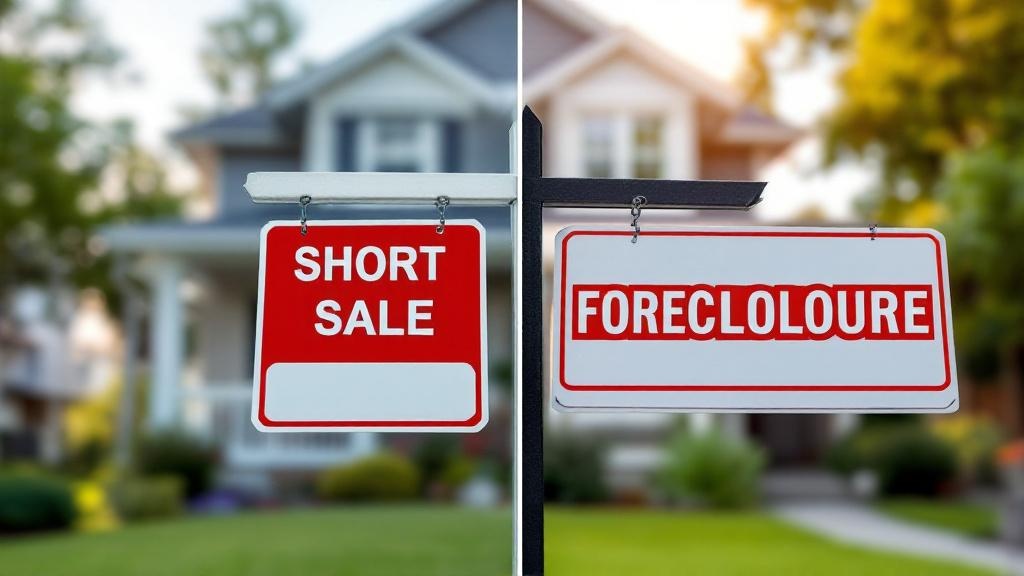
Short sales and foreclosures represent two distinct paths for homeowners facing financial distress, each with significantly different implications for credit, timeline, and future borrowing ability. The fundamental difference lies in control and voluntary participation.
In a short sale, homeowners retain control over the selling process. They work with a real estate agent to market the property, negotiate with potential buyers, and seek lender approval for the sale price. This collaborative approach requires active participation throughout the process.
Foreclosure removes homeowner control entirely. Once the legal process begins, the lender assumes control of the property and timeline. Homeowners become powerless observers as their property moves through the legal system toward auction or bank ownership.
Short sales typically occur when homeowners recognize financial difficulties early and seek solutions before missing multiple payments. According to the Consumer Financial Protection Bureau, short sales require homeowner demonstration of financial hardship and inability to continue payments.
Foreclosures usually follow after homeowners have missed several mortgage payments and exhausted other options. The formal foreclosure process begins with a notice of default, typically issued after 90+ days of missed payments.
Both options affect credit scores negatively, but the severity and recovery timeline vary dramatically. Understanding these differences helps homeowners choose the path that best protects their financial future and aligns with their specific circumstances.
Credit Score Impact Comparison
Short sales cause less credit damage than foreclosures, typically reducing scores by 50-150 points versus 200-400 point drops from foreclosure, with faster recovery timelines.
The credit impact represents one of the most significant differences between short sales and foreclosures, affecting homeowners’ financial opportunities for years after the event.
Short Sale Credit Effects
Short sales create moderate credit damage compared to foreclosures, though the impact remains substantial. Credit scores typically drop 50-150 points following a short sale, depending on the borrower’s starting score and overall credit profile.
The short sale appears on credit reports as “settled for less than owed” or “paid, settled for less than full balance.” This notation indicates to future lenders that the borrower negotiated a reduced payoff with their previous mortgage lender.
According to FICO research, borrowers with credit scores above 680 before a short sale typically see drops of 85-105 points, while those with lower starting scores experience smaller absolute decreases but similar percentage impacts.
Recovery from short sale credit damage occurs relatively quickly compared to foreclosure. Most borrowers see their scores begin recovering within 12-24 months, with return to good credit status (above 650) possible within 2-3 years with responsible credit management.
Key factors influencing short sale credit impact include payment history before the sale, overall credit mix, and whether other accounts remain current. Borrowers who complete short sales before missing payments typically experience less severe score decreases.
Future lenders view short sales more favorably than foreclosures because they demonstrate proactive problem-solving and cooperation with the original lender. This perception can influence loan approval decisions and interest rates offered during the recovery period.
Foreclosure Credit Damage
Foreclosures create severe, long-lasting credit damage that significantly exceeds short sale impacts. Credit scores typically plummet 200-400 points following foreclosure, with higher-score borrowers experiencing the most dramatic drops.

The foreclosure notation remains visible on credit reports for seven years from the completion date. This extended visibility creates ongoing challenges for loan approvals, employment background checks, and rental applications throughout the reporting period.
| Starting Credit Score | Short Sale Drop | Foreclosure Drop | Post-Foreclosure Score |
|---|---|---|---|
| 780 | 85-105 points | 200-240 points | 540-580 |
| 680 | 65-85 points | 150-190 points | 490-530 |
| 620 | 50-70 points | 130-160 points | 460-490 |
Foreclosures signal to lenders that the borrower completely defaulted on their mortgage obligation, creating maximum risk perception. This perception influences loan decisions far beyond the mathematical credit score impact.
The foreclosure process often includes additional negative marks like late payments, charge-offs, and collection accounts. These multiple negative entries compound the credit damage beyond the foreclosure itself.
Recovery Timeline Differences
Recovery timelines represent a crucial difference between short sales and foreclosures, directly affecting when homeowners can access credit and purchase new homes.
Short sale recovery typically allows new mortgage applications within 2-4 years, depending on the loan program and borrower’s overall financial profile. Government-backed loans often have shorter waiting periods than conventional financing.
| Loan Type | Short Sale Waiting Period | Foreclosure Waiting Period |
|---|---|---|
| FHA Loan | 3 years | 3 years |
| VA Loan | 2 years | 2 years |
| Conventional Loan | 2-4 years | 7 years |
| USDA Loan | 3 years | 3 years |
Foreclosure recovery requires significantly longer waiting periods, particularly for conventional loans that impose seven-year waiting periods. This extended timeline can affect major life decisions like family planning, career changes, and geographic relocation.
Factors affecting recovery speed include credit rebuilding efforts, income stability, debt-to-income ratios, and down payment savings. Borrowers who aggressively rebuild credit and demonstrate financial stability can sometimes qualify for exceptions to standard waiting periods.
Financial Consequences
Beyond credit impacts, short sales and foreclosures create different financial consequences including deficiency judgment risks, tax implications, and future borrowing costs.
Deficiency Judgments
Deficiency judgments occur when lenders pursue borrowers for the remaining balance after a property sale fails to cover the full mortgage debt. California provides strong borrower protections that significantly limit deficiency judgment risks.
California’s anti-deficiency statutes, particularly Civil Code Section 580b and 580d, protect homeowners from deficiency judgments in most residential property situations. These laws apply to both short sales and foreclosures involving purchase money loans on owner-occupied properties.
Short sales in California rarely result in deficiency judgments due to these statutory protections and the negotiated nature of the transaction. Lenders typically agree to waive deficiency rights as part of the short sale approval process.
Foreclosures involving non-judicial trustee sales (the most common type in California) automatically preclude deficiency judgments under Civil Code Section 580d. However, lenders can choose judicial foreclosure to preserve deficiency rights, though this option requires court proceedings and extends the timeline significantly.
Exceptions to anti-deficiency protections include refinanced portions of loans, home equity lines of credit, and investment properties. Borrowers with these situations face greater deficiency risks and should consult with attorneys before choosing between options.
Even where deficiency judgments are legally possible, lenders rarely pursue them due to collection difficulties and cost considerations. According to California Civil Code, the anti-deficiency laws provide comprehensive borrower protection in most residential situations.
Tax Implications
Tax consequences represent a complex area where short sales and foreclosures can create significant financial obligations through forgiven debt taxation.

When lenders forgive mortgage debt through short sales or foreclosures, the forgiven amount typically becomes taxable income. The IRS treats debt forgiveness as income because the borrower received economic benefit without repaying the obligation.
Lenders issue Form 1099-C (Cancellation of Debt) when they forgive $600 or more in mortgage debt. This form reports the forgiven amount to both the borrower and the IRS, creating a tax reporting requirement.
The Mortgage Forgiveness Debt Relief Act provided temporary relief for primary residence mortgage debt forgiveness through 2020, though extensions and modifications continue to evolve. Current law allows exclusion of up to $750,000 in forgiven qualified principal residence debt.
Insolvency exceptions provide additional protection for borrowers whose total debts exceed their assets at the time of debt forgiveness. Borrowers can exclude forgiven debt from income up to the amount they were insolvent, potentially eliminating tax consequences entirely.
Short sales often provide better tax planning opportunities because the timing is more predictable and controllable compared to foreclosures. Homeowners can work with tax professionals to optimize the timing and structure of the transaction for tax purposes.
California generally conforms to federal tax treatment but maintains some differences. Professional tax consultation becomes essential for understanding the complete tax picture in either scenario.
Future Loan Eligibility
Future borrowing ability differs substantially between short sales and foreclosures, affecting not only mortgage availability but also terms, rates, and down payment requirements.
Short sale borrowers typically qualify for better interest rates and loan terms compared to foreclosure borrowers, even after meeting waiting period requirements. Lenders view short sales as evidence of responsible decision-making during financial difficulties.
Down payment requirements often favor short sale borrowers, with some programs allowing down payments as low as 3-3.5% compared to higher requirements for post-foreclosure borrowers. This difference can significantly affect the ability to purchase new homes.
| Loan Program | Short Sale Down Payment | Foreclosure Down Payment | Rate Premium |
|---|---|---|---|
| FHA | 3.5% | 10% (first 3 years) | 0.25% higher for foreclosure |
| Conventional | 5-10% | 20% typically required | 0.50-1.00% higher |
Employment and rental applications may also consider foreclosure history more negatively than short sale history, particularly in finance, banking, and real estate industries where credit history receives heightened scrutiny.
Process Timeline Comparison
Short sales typically take 3-6 months to complete while California foreclosures require 6-18+ months due to legal requirements and borrower protection laws.
Short Sale Steps and Duration
The short sale process involves multiple stages requiring coordination between homeowners, agents, buyers, and lenders. Understanding each step helps set realistic expectations for timeline and effort required.
Initial preparation requires gathering financial documentation, obtaining broker price opinions, and preparing hardship letters. This stage typically takes 2-4 weeks depending on homeowner organization and agent experience.
Marketing the property follows normal real estate listing procedures but requires disclosure of the short sale status. Properties often take longer to sell due to buyer concerns about approval uncertainty and extended timelines.
Lender approval represents the most time-consuming and unpredictable phase. Banks must review borrower financials, validate hardship claims, order property valuations, and negotiate with buyers. This process typically takes 60-120 days.
Multiple lender involvement complicates the process significantly. Properties with first and second mortgages require approval from all lenders, with each having different requirements, timelines, and negotiation positions.
California-specific considerations include mandatory mediation programs in some counties, which can add 30-60 days to the process but often improve approval rates and terms.
Final approval and closing procedures follow standard real estate practices once all parties agree to terms. However, last-minute lender changes or additional requirements can extend the process unexpectedly.
The overall timeline averages 4-6 months but can extend to 8-12 months in complex situations involving multiple lenders, investor properties, or borrowers with complicated financial situations.
Foreclosure Timeline in California
California’s non-judicial foreclosure process provides specific borrower protections while establishing minimum timelines that extend the overall process compared to many other states.
The process begins with a Notice of Default (NOD) filed after typically 90+ days of missed payments. California law requires a 30-day grace period before NOD filing, though lenders often provide additional time for borrower outreach attempts.
Following NOD filing, borrowers receive a minimum 90-day reinstatement period during which they can cure the default by paying all missed payments, fees, and costs. This period provides opportunity for loan modifications or other workout solutions.
According to California Department of Business Oversight data, the average foreclosure timeline in California extends 180-400 days from first missed payment to sale completion, significantly longer than the minimum legal requirements.
Notice of Trustee Sale (NOTS) follows the reinstatement period, providing an additional 21-day notice before the actual foreclosure auction. This notice must be published, posted, and mailed according to strict legal requirements.
The trustee sale occurs as a public auction, typically at the county courthouse or designated location. Properties not sold to third parties become bank-owned (REO) properties.
California’s Homeowner Bill of Rights provides additional protections including dual-tracking prohibitions and loss mitigation requirements that can extend timelines further when borrowers actively pursue alternatives.
Skip the Complications – Get Cash Now
Don’t navigate the complex short sale or foreclosure process. First Choice Home Sale provides immediate cash offers and closes in 7-14 days, protecting your credit and your future. No repairs, no agent fees, no lengthy negotiations.
Get your cash offer today: (866) 643-5829
Third Alternative: Quick Cash Sale
Cash sales offer immediate solutions that can avoid both short sale and foreclosure complications, potentially preserving credit while providing fast property disposition and immediate relief.
Benefits Over Short Sale
Cash sales eliminate the most problematic aspects of short sales while providing immediate financial relief and certainty. The primary advantage involves removing lender approval requirements that create uncertainty and delays in traditional short sales.
Speed represents the most significant benefit, with cash sales closing in 7-14 days compared to 3-6 months for short sales. This rapid timeline allows homeowners to address financial difficulties immediately rather than waiting months for uncertain outcomes.
Credit preservation becomes possible when cash sales complete before missed payments begin. Homeowners who recognize financial difficulties early can sell quickly and maintain their credit scores, avoiding the negative impacts of both short sales and foreclosures.
Equity preservation may be possible depending on current market values and outstanding loan balances. While short sales result in lender-negotiated prices that may not reflect full market value, cash buyers often provide offers based on actual market conditions.
Stress reduction provides immeasurable benefit for families facing foreclosure. The certainty of a cash sale eliminates months of uncertainty, paperwork, and negotiation that characterize short sale processes.
No repair requirements mean homeowners can sell properties in any condition without the expense and effort of preparing homes for traditional market sales. This benefit particularly helps homeowners facing financial constraints.
Speed Advantage
The speed advantage of cash sales creates multiple benefits that compound to provide superior outcomes compared to traditional alternatives.
Immediate relief allows homeowners to begin fresh starts quickly rather than enduring months of financial and emotional stress. This psychological benefit often proves as valuable as the financial advantages.
| Option | Average Timeline | Credit Impact | Certainty Level |
|---|---|---|---|
| Cash Sale | 7-14 days | None (if before default) | High |
| Short Sale | 3-6 months | 50-150 point drop | Medium |
| Foreclosure | 6-18 months | 200-400 point drop | Low |
Financial planning becomes possible with cash sales because homeowners know exactly when they’ll receive proceeds and can plan accordingly. Short sales and foreclosures provide uncertainty that makes financial planning extremely difficult.
Moving coordination improves dramatically with definite closing dates, allowing families to secure new housing, arrange moving services, and transfer utilities with confidence.
Credit Protection
Credit protection represents the most significant long-term benefit of cash sales, particularly when completed before payment difficulties begin.
Preserving good credit maintains access to future financing at favorable rates, employment opportunities, rental applications, and insurance rates. The value of maintaining good credit often exceeds the immediate financial benefits of the property sale.
Even homeowners who have already missed payments can limit credit damage by completing cash sales quickly rather than allowing situations to deteriorate through lengthy short sale or foreclosure processes.
Future borrowing ability remains intact when credit scores are preserved, allowing homeowners to purchase replacement properties immediately if desired rather than waiting years for credit recovery.
Which Option Is Best for You
The best option depends on individual circumstances including current equity, payment status, timeline needs, and long-term financial goals.
Decision Factors
Choosing between short sale, foreclosure, or cash sale requires careful evaluation of multiple factors that vary significantly among homeowners’ situations.
Current equity position influences which options provide financial benefit. Homeowners with significant negative equity may benefit more from short sales or strategic defaults, while those with minimal negative equity might prefer cash sales.
Payment status affects available options and urgency. Homeowners current on payments have maximum flexibility and can choose cash sales to preserve credit, while those already in default face more limited options with greater time pressure.
| Situation | Best Option | Reason |
|---|---|---|
| Current payments, moderate equity | Cash Sale | Preserve credit, quick resolution |
| Behind payments, significant negative equity | Short Sale | Minimize credit damage, avoid deficiency |
| Multiple missed payments, no equity | Strategic Default | Use foreclosure timeline for planning |
| Temporary hardship, good equity | Loan Modification | Keep property, modify terms |
Timeline needs vary based on personal circumstances. Families needing immediate relocation for employment or other reasons benefit from cash sales, while those with flexibility may pursue short sales for potentially better financial outcomes.
Future housing plans influence decision-making. Homeowners planning to rent for several years may accept credit damage from foreclosure to maximize cash available for relocation, while those wanting to purchase soon need credit preservation.
Risk tolerance affects comfort levels with different options. Short sales involve uncertainty and potential failure, while cash sales provide certainty at potentially lower proceeds.
California’s strong anti-deficiency protections make foreclosure less risky than in states allowing deficiency judgments, influencing optimal strategies.
Professional Consultation
Professional guidance becomes essential given the complexity and long-term implications of these decisions. Multiple types of professionals provide specialized expertise for different aspects of the decision.
Real estate attorneys provide crucial guidance on state-specific laws, deficiency judgment risks, and legal implications of each option. California’s complex foreclosure and short sale laws require professional interpretation for optimal decision-making.
Tax professionals help evaluate potential tax consequences from debt forgiveness, timing strategies, and available exemptions. The tax implications can significantly affect the net financial impact of each option.
HUD-approved housing counselors provide free consultation services to help homeowners understand options and navigate lender negotiations. These counselors offer unbiased advice without sales motivations.
Experienced real estate professionals familiar with distressed property sales provide market insights and realistic outcome expectations. Their experience with lender negotiations and process management proves invaluable.
Financial advisors help evaluate long-term implications and integration with overall financial planning. The decision affects not just immediate housing needs but long-term financial recovery and goal achievement.
Professional fees represent small costs compared to the financial implications of suboptimal decisions in these high-stakes situations.
Frequently Asked Questions
How much does a short sale hurt your credit score?
Short sales typically reduce credit scores by 50-150 points, depending on your starting score and overall credit profile. Borrowers with higher credit scores often experience larger point drops, but recovery is possible within 2-3 years with responsible credit management.
Is a short sale better than foreclosure for your credit?
Yes, short sales cause less credit damage than foreclosures. While short sales drop scores 50-150 points, foreclosures typically cause 200-400 point decreases and remain on credit reports for 7 years versus faster recovery from short sales.
How long does it take to recover from a short sale?
Credit recovery from short sales typically takes 2-3 years to achieve good credit status (above 650). New mortgage eligibility varies by loan type, with VA loans allowing purchases after 2 years and conventional loans requiring 2-4 years.
Can I avoid both short sale and foreclosure?
Yes, cash sales offer an alternative that can preserve your credit if completed before missing payments. First Choice Home Sale provides cash offers that close in 7-14 days, helping homeowners avoid the credit damage and lengthy timelines of traditional alternatives.
Do I owe money after a short sale in California?
California’s anti-deficiency laws generally protect homeowners from owing money after short sales on primary residences. Civil Code Sections 580b and 580d prevent lenders from pursuing deficiency judgments in most residential situations.
How long does the foreclosure process take in California?
California foreclosures typically take 6-18 months from first missed payment to completion. The state requires minimum 111-day notice periods, but lender processing delays and borrower protection programs often extend the actual timeline significantly longer.
Protect Your Credit with a Fast Cash Sale
Don’t let short sales or foreclosure damage your financial future. First Choice Home Sale offers immediate cash solutions that close in 7 days, protecting your credit while providing the fresh start you need. We buy houses in any condition throughout Southern California.
Call First Choice Home Sale today: (866) 643-5829
Get your no-obligation cash offer and skip the complications of traditional alternatives.