
Homeowners facing extensive repair bills often wonder whether to sell fixer upper properties as-is or invest in costly renovations. Professional cash buyers assess fixer uppers using ARV minus repair costs minus profit margin formula, providing immediate relief for owners overwhelmed by major repair needs. First Choice Home Sale specializes in purchasing homes requiring significant renovations throughout Orange County, eliminating financial burden and time constraints of expensive repair projects.
Get Your Cash Offer Today
Don’t let expensive repairs drain your savings. We buy fixer uppers in any condition for cash.
Call (866) 643-5829 for your free consultation
Key Takeaways
- Fixer uppers requiring $15,000+ in repairs qualify as handyman specials with limited buyer pools
- Cash buyers eliminate repair contingencies, financing delays, and negotiation complications
- Professional assessment uses ARV calculations to determine fair market value for distressed properties
- Major repair categories include structural, mechanical systems, water damage, and foundation issues
- Traditional market limitations create extended selling timelines and reduced buyer interest
- Experienced renovation buyers complete purchases in 7-14 days without repair requirements
What Qualifies as a Fixer Upper Property
Fixer upper properties require $15,000 or more in repairs, including structural issues, outdated systems, water damage, or code violations. These handyman specials need significant renovations before meeting modern habitability standards.
A fixer upper house typically exhibits multiple repair needs exceeding routine maintenance costs. Properties falling into this category require substantial investment in structural improvements, mechanical system updates, or extensive cosmetic renovations. According to the U.S. Census Bureau housing characteristics survey, approximately 37% of housing units built before 1970 require major system replacements.
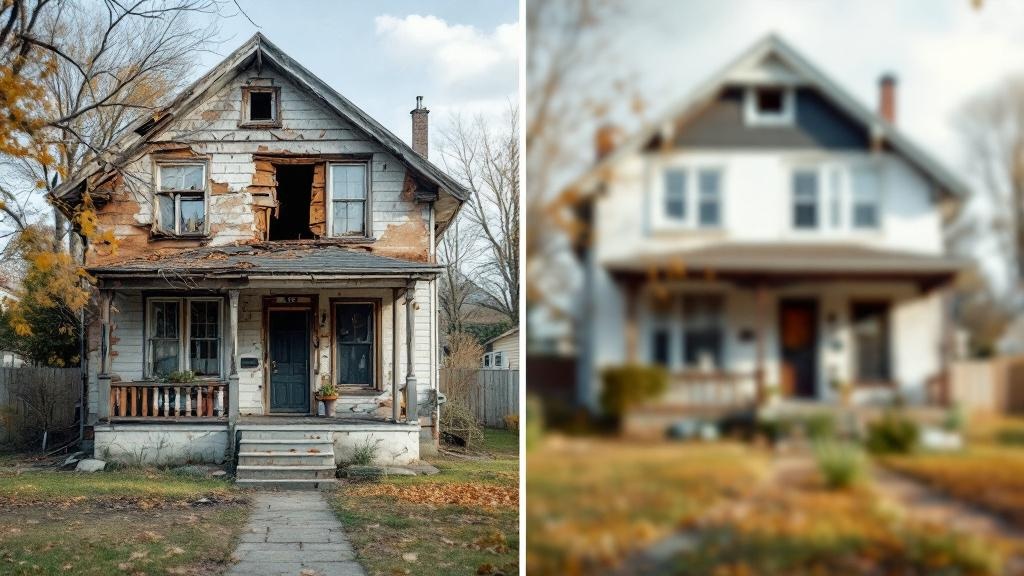
Most fixer upper buyers focus on properties with repair estimates exceeding 20% of the home’s after-repair value. These distressed properties often feature functional obsolescence, where outdated systems and layouts no longer meet current living standards. Inherited properties frequently fall into this category, especially when previous owners deferred maintenance for extended periods.
Major Repair Categories
Structural repairs represent the most expensive category, typically ranging from $25,000 to $100,000 for foundation issues, load-bearing wall problems, or roof replacements. Mechanical system overhauls including HVAC, electrical, and plumbing updates average $15,000 to $45,000 per system. Water damage restoration projects cost between $10,000 and $50,000 depending on affected areas and structural impact.
Fire damage, mold remediation, and environmental hazards create specialized repair needs requiring certified professionals. Code violation corrections often mandate complete system upgrades to meet current building standards. These major repair house sale scenarios frequently overwhelm homeowners with limited renovation experience or financial resources.
Structural vs Cosmetic Issues
Structural problems affect a home’s safety and stability, including foundation settling, roof damage, load-bearing wall issues, or framing deterioration. These repairs require professional engineers, building permits, and specialized contractors. Cosmetic issues involve paint, flooring, fixtures, and surface-level improvements that don’t impact structural integrity.
Cash buyers distinguish between these categories when evaluating purchase offers. Structural repairs carry higher risk and cost uncertainty, significantly impacting property valuations. Cosmetic issues offer more predictable renovation timelines and budget requirements, making properties more attractive to investors and handyman special buyers.
Systems Requiring Replacement
HVAC systems over 15 years old typically require replacement, especially units showing poor efficiency or frequent repairs. Electrical panels installed before 1990 often need updates to meet current safety codes and capacity requirements. Original plumbing in homes built before 1980 may contain outdated materials requiring complete replacement.
These system replacements represent significant renovation project components. Buyers without renovation experience struggle to coordinate multiple contractors, obtain proper permits, and manage project timelines. Professional renovation project sale specialists understand these complexities and provide fair valuations based on actual replacement costs.
Why Homeowners Sell Fixer Uppers As-Is
Homeowners sell fixer uppers as-is due to overwhelming repair costs, time constraints, financial limitations, or lack of renovation experience. Immediate cash sales provide relief from expensive project management responsibilities.
Financial constraints represent the primary reason homeowners choose as-is sales over renovation projects. Many property owners lack available cash or credit access for extensive repairs. Emergency situations requiring quick relocation or debt resolution make lengthy renovation timelines impractical. Inherited properties often burden families with unexpected repair costs exceeding their financial capabilities.

Elderly homeowners frequently lack physical capacity or energy to manage renovation projects. Coordination with multiple contractors, permit applications, and project oversight creates overwhelming stress for inexperienced property owners. Our as-is home buying services eliminate these management burdens while providing immediate cash solutions.
Overwhelming Repair Costs
According to HomeAdvisor’s 2024 True Cost Guide, major home renovations average 20-30% over initial estimates, with structural repairs showing the highest cost overruns at 35-50% above original budgets.
Complete home renovations average $100,000 to $200,000 for properties requiring multiple system replacements. Kitchen and bathroom remodels alone cost $25,000 to $75,000 per room. Roof replacements range from $15,000 to $30,000, while foundation repairs can exceed $50,000 for extensive damage.
Property owners must consider whether renovation investments will increase home values sufficiently to justify costs. In many cases, sell house needs repairs strategies provide better financial outcomes than attempting expensive renovation projects with uncertain returns.
Time and Energy Constraints
Renovation projects typically require 3-12 months for completion, depending on scope and complexity. Homeowners must coordinate contractor schedules, material deliveries, permit inspections, and quality control throughout the process. Living in construction zones creates daily inconvenience and stress for families.
Project management demands significant time investment for homeowners without construction experience. Delayed timelines, cost overruns, and quality issues commonly occur when property owners attempt self-managed renovations. Professional cash buyers eliminate these time and energy constraints completely.
Financial Limitations
Construction loans require substantial down payments, strong credit scores, and detailed project plans before approval. Many homeowners cannot qualify for renovation financing or lack sufficient equity to secure loans. Cash flow challenges prevent covering contractor payments, material costs, and unexpected expenses during projects.
Investment property owners face additional financing constraints with commercial lending requirements. Properties with existing tenants create income disruption during renovation periods. Emergency financial situations requiring immediate cash make lengthy renovation projects impractical regardless of potential returns.
Fixer Upper Valuation Methods
Professional fixer upper valuation uses three methods: ARV assessment, comprehensive repair cost estimation, and market comparable analysis. Experienced buyers combine these approaches to determine fair purchase offers for distressed properties.
Accurate valuation requires extensive market knowledge and renovation cost experience. Professional cash buyers maintain current pricing databases for construction materials, labor costs, and permit fees. They understand local market conditions affecting property values and renovation feasibility. Individual homeowners rarely possess this specialized knowledge necessary for accurate self-evaluation.

The National Association of Realtors market data shows fixer upper properties typically sell for 15-25% below comparable move-in ready homes. This discount reflects buyer uncertainty about hidden repairs, permit requirements, and project completion risks. Professional assessment eliminates guesswork while providing transparent valuation explanations.
ARV (After Repair Value) Assessment
ARV calculations determine property values after completing all necessary repairs and updates. Professional assessors analyze recent sales of similar properties in fully renovated condition within the same neighborhood. They adjust comparable sales for differences in square footage, lot size, architectural features, and location factors.
Market conditions significantly impact ARV calculations, especially in rapidly changing real estate environments. Properties in declining neighborhoods may not support extensive renovation investments, while appreciating markets justify higher repair budgets. Professional buyers understand these market dynamics and adjust valuations accordingly.
Repair Cost Estimation
Comprehensive repair estimates require detailed property inspections by experienced contractors or construction professionals. Cost calculations include materials, labor, permits, and contractor profit margins for each repair category. Professional estimators add 15-20% contingency allowances for unexpected issues discovered during renovation work.
Regional cost variations significantly affect repair estimates. California labor costs typically exceed national averages by 25-40% for skilled trades. Material costs fluctuate based on local availability and transportation expenses. Accurate estimates require current local pricing knowledge and contractor relationships.
Market Comparable Analysis
Comparable sales analysis examines recent transactions of similar fixer upper properties within one-mile radius. Professional analysis adjusts prices for condition differences, repair needs, and time on market variations. Seasonal market factors and neighborhood trends influence comparable selection and adjustment calculations.
Properties requiring similar repair categories provide the most reliable comparison data. Unique situations like estate sales, foreclosures, or divorce-motivated transactions may create pricing anomalies requiring careful interpretation. Professional buyers maintain comprehensive databases of distressed property sales for accurate market analysis.
Skip the Renovation Headaches
Get a fair cash offer for your fixer upper without spending thousands on repairs.
Call First Choice Home Sale at (866) 643-5829
Major Repair Categories We Handle
We purchase fixer uppers requiring HVAC replacement, electrical updates, plumbing overhauls, roofing work, foundation repairs, and structural modifications. Our experienced team handles properties with repair costs ranging from $15,000 to $150,000+.
Professional cash buyers specialize in properties requiring comprehensive renovations across multiple system categories. Our extensive contractor network and renovation experience enable accurate cost assessments for complex repair projects. We purchase homes regardless of repair scope, condition severity, or permit violation issues.

| Repair Category | Typical Cost Range | Complexity Level | Timeline |
|---|---|---|---|
| HVAC Replacement | $8,000 – $25,000 | Moderate | 3-5 days |
| Electrical Updates | $5,000 – $20,000 | High | 5-10 days |
| Plumbing Overhaul | $8,000 – $30,000 | High | 7-14 days |
| Roof Replacement | $15,000 – $40,000 | Moderate | 3-7 days |
| Foundation Repair | $10,000 – $80,000 | Very High | 14-30 days |
HVAC System Replacement
Outdated HVAC systems over 15 years old commonly require complete replacement in fixer upper properties. Original equipment in homes built before 2000 typically lacks energy efficiency standards mandated by current building codes. Ductwork modifications often accompany system replacements, adding complexity and cost to renovation projects.
Professional buyers understand HVAC replacement impacts on property values and marketability. New systems improve energy efficiency, indoor air quality, and buyer appeal. However, homeowners facing $15,000-$25,000 replacement costs often choose immediate cash sales over expensive system updates with uncertain return on investment.
Electrical System Updates
Electrical systems in homes built before 1980 frequently require complete updates to meet current safety codes. Outdated panels, insufficient amperage capacity, and obsolete wiring create safety hazards and insurance complications. Modern appliance loads exceed original electrical system designs, necessitating comprehensive upgrades.
Panel replacements cost $2,000-$5,000, while whole-house rewiring ranges from $8,000-$15,000 depending on home size and accessibility. Permit requirements and inspection processes add time and complexity to electrical projects. Properties with electrical code violations may be uninsurable until updates are completed.
Plumbing Overhauls
Original plumbing in homes built before 1980 often contains galvanized steel, cast iron, or polybutylene materials requiring replacement. These obsolete materials cause water pressure problems, frequent leaks, and potential water damage. Complete repiping projects range from $8,000-$25,000 for typical single-family homes.
Sewer line replacements add significant costs when main drainage systems fail or violate current codes. Fixture replacements, bathroom updates, and accessibility improvements frequently accompany plumbing overhauls. Properties with active leaks or water damage require immediate attention regardless of renovation plans.
Roofing and Structural Work
Roof systems over 20 years old typically require replacement, especially following storm damage or deferred maintenance periods. Structural roof damage affects home safety and habitability, making properties difficult to finance through conventional mortgages. Complete roof replacements cost $15,000-$40,000 depending on materials, home size, and accessibility factors.
Foundation issues create the most expensive structural repair category, with costs ranging from $10,000 for minor settling to $80,000+ for major structural repairs. Load-bearing wall modifications, floor joist reinforcement, and seismic retrofitting require engineering assessments and specialized contractors. These complex projects overwhelm most homeowners without construction experience.
Fixer Upper vs Traditional Market
Fixer upper properties face limited buyer pools, financing difficulties, and extended market times compared to move-in ready homes. Traditional markets offer broader buyer appeal but require significant repair investments before listing.
The traditional real estate market strongly favors move-in ready properties with minimal repair needs. According to NAR’s 2023 Home Buyers and Sellers Generational Trends Report, 78% of buyers prefer properties requiring no immediate repairs. This preference creates significant challenges for fixer upper marketing and pricing strategies.
| Market Factor | Traditional Market | Fixer Upper Market |
|---|---|---|
| Average Days on Market | 30-45 days | 60-120 days |
| Buyer Pool Size | 100% of qualified buyers | 15-25% of buyers |
| Financing Options | All loan types available | Limited to cash/renovation loans |
| Negotiation Power | Seller advantage in good markets | Buyer advantage always |
Limited Buyer Pool Challenges
Fixer upper properties primarily attract investors, contractors, and experienced renovators with cash purchasing capability. This specialized buyer pool represents only 15-25% of total market participants. Retail buyers seeking primary residences typically avoid properties requiring significant repairs or renovation work.
Investment buyers focus on profit margins and return calculations rather than emotional attachment to properties. They negotiate aggressively and demand significant discounts to justify renovation risks and carrying costs. Competition among sellers in the fixer upper market intensifies these buyer advantages and pricing pressures.
Financing Difficulties
Conventional mortgages require properties to meet habitability standards and pass professional appraisals. Homes with significant repair needs often fail these requirements, eliminating traditional financing options. FHA 203(k) renovation loans provide alternatives but require extensive documentation, contractor pre-approval, and extended processing times.
Renovation loan complexity discourages many potential buyers from pursuing fixer upper purchases. Cash buyers eliminate financing uncertainty and provide faster closing timelines. Properties in poor condition may appraise below purchase prices, creating additional complications for financed transactions.
Extended Market Time
Fixer upper properties typically remain on the market 60-120 days compared to 30-45 days for move-in ready homes. Extended marketing periods increase holding costs, property deterioration, and seller stress. Seasonal factors affect fixer upper sales more significantly than traditional properties, with winter months showing reduced buyer activity.
Price reductions become necessary when properties exceed typical market times without acceptable offers. Multiple price adjustments create negative perceptions among potential buyers and real estate professionals. Quick cash sales eliminate these extended marketing challenges while providing immediate transaction certainty.
Cash Buyer Advantages for Fixer Uppers
Cash buyers offer no repair contingencies, fast 7-14 day closings, and extensive renovation experience. They purchase fixer uppers as-is, eliminating seller repair obligations and financing-related transaction delays completely.
Professional cash buyers bring unique advantages to fixer upper transactions that traditional buyers cannot match. Our renovation experience enables accurate cost assessments and realistic project timelines. We maintain established contractor networks, material supplier relationships, and permit processing knowledge accumulated through hundreds of renovation projects.
According to the National Association of Realtors, cash sales close 23% faster than financed transactions, with fixer upper cash sales showing even greater time savings due to eliminated inspection negotiations and repair contingencies.
No Repair Contingencies
Cash buyers purchase properties as-is without repair contingencies or seller concessions. Professional inspections serve informational purposes only, never becoming negotiation tools or transaction cancellation reasons. This approach eliminates seller uncertainty about repair negotiations, cost disputes, or deal cancellations based on discovered issues.
Traditional buyers commonly request repair credits, seller-funded improvements, or purchase price reductions following inspection periods. These negotiations extend transaction timelines and create deal cancellation risks. As-is purchases provide complete transaction certainty from contract acceptance through closing completion.
Fast Closing Process
Cash transactions eliminate mortgage approval processes, appraisal requirements, and lender-imposed delays. Professional buyers complete title work, property inspections, and closing preparations within 7-14 days from contract acceptance. Quick closings benefit sellers facing urgent relocation, financial deadlines, or emergency cash needs.
No financing contingencies mean no loan rejection risks or last-minute transaction failures. Sellers receive definitive closing dates with confidence in completion timing. Properties requiring immediate attention due to vacancy, security concerns, or weather exposure benefit significantly from accelerated transaction timelines.
Experience with Renovation Projects
Professional renovation buyers understand project complexities, hidden repair discovery risks, and accurate cost estimation methods. Years of hands-on experience provide realistic timelines, contractor management skills, and problem-solving capabilities for challenging renovation projects.
Our established contractor relationships ensure quality work, competitive pricing, and reliable project completion. We understand permit processes, code compliance requirements, and inspection procedures across multiple jurisdictions. This expertise translates into fair property valuations and smooth transaction processes for sellers.
Renovation Project Assessment
Professional renovation assessment involves comprehensive scope evaluation, accurate budget planning, and realistic timeline development. Experienced buyers identify hidden issues, permit requirements, and project complexities homeowners typically overlook.
Thorough property assessment requires systematic evaluation of all major building systems, structural components, and cosmetic conditions. Professional inspectors document existing conditions, identify code violations, and estimate repair priorities. This comprehensive approach prevents cost surprises and project delays commonly experienced by inexperienced renovators.
Our assessment process includes environmental testing for lead, asbestos, and mold when properties were built before 1980. We evaluate neighborhood trends, comparable property values, and renovation appropriateness for each location. This thorough analysis ensures renovation investments align with market realities and profit expectations.
Scope of Work Evaluation
Comprehensive property inspections identify all repair needs, from obvious damage to hidden structural issues. Professional assessors examine foundations, framing, roofing, mechanical systems, and environmental concerns systematically. They distinguish between required repairs, code compliance updates, and value-added improvements.
Permit requirements analysis determines which repairs need building department approval and inspection. Complex projects may require engineering assessments, architectural drawings, or specialty contractor certifications. Understanding permit processes prevents project delays and ensures legal compliance throughout renovation work.
Priority repair identification helps budget allocation and project phasing decisions. Life safety issues, structural problems, and weather protection receive immediate attention. Cosmetic improvements and value-added features become secondary priorities after essential repairs are completed.
Budget and Timeline Planning
Professional cost estimation includes materials, labor, permits, and contingency allowances for unexpected discoveries. Current market pricing for lumber, electrical components, plumbing fixtures, and specialty materials affects renovation budgets significantly. We maintain updated cost databases reflecting seasonal fluctuations and regional variations.
Project phasing strategies minimize disruption and optimize contractor scheduling efficiency. Mechanical system installations occur before finish work begins. Weather-dependent exterior work gets prioritized during favorable seasons. Proper sequencing prevents rework and reduces overall project timelines.
Contingency planning addresses common renovation challenges like permit delays, material shortages, and unexpected structural issues. Professional buyers budget 15-20% additional funds for unforeseen circumstances. This conservative approach prevents project abandonment when complications arise during renovation work.
Frequently Asked Questions
How much do fixer uppers sell for compared to renovated homes?
Fixer uppers typically sell for 15-25% below comparable renovated homes in the same neighborhood. The exact discount depends on repair scope, property condition, and local market conditions. Properties requiring $50,000+ in repairs often see discounts of 30-40% or more.
What repairs are too expensive to make before selling?
Repairs exceeding 20-25% of the home’s after-repair value are typically too expensive for homeowners to undertake before selling. Foundation repairs over $40,000, extensive structural work, and major system replacements often justify as-is sales instead of owner renovations.
Should I fix my house before selling or sell as-is?
Sell as-is when repair costs exceed your available budget, timeline constraints prevent renovation completion, or when total repairs exceed 25% of the renovated home value. Cash buyers eliminate renovation requirements and provide immediate sale certainty.
How long does it take to sell a fixer upper house?
Traditional market sales of fixer uppers average 60-120 days compared to 30-45 days for move-in ready properties. Cash buyer sales complete in 7-14 days regardless of property condition, eliminating extended market exposure and carrying costs.
Do cash buyers pay fair prices for fixer uppers?
Professional cash buyers use ARV calculations, comprehensive repair estimates, and market analysis to determine fair offers. While cash offers may be lower than retail prices, they reflect actual costs of repairs, renovation risks, and carrying expenses during project completion.
What documents do I need to sell my fixer upper?
Basic documents include property deed, recent tax statements, utility bills, and any available repair estimates or inspection reports. Cash buyers handle title work, inspections, and closing documentation, minimizing seller paperwork requirements significantly.
Ready to Sell Your Fixer Upper?
Get a fair cash offer for your property without spending money on expensive repairs. First Choice Home Sale buys fixer uppers throughout Orange County in any condition.
Call (866) 643-5829 today for your free consultation
Selling a sell fixer upper property requires understanding market limitations, buyer preferences, and realistic valuation methods. Professional cash buyers eliminate the complexity, expense, and uncertainty of renovation projects while providing immediate financial relief. First Choice Home Sale specializes in purchasing homes needing major repairs, offering homeowners a straightforward alternative to costly renovation investments throughout Orange County’s challenging real estate market.