A deed in lieu of foreclosure offers homeowners facing financial hardship a way to voluntarily transfer property ownership to their lender instead of enduring a lengthy foreclosure process. This foreclosure alternative can provide faster resolution while potentially minimizing credit damage compared to traditional foreclosure proceedings. Understanding the deed in lieu process, requirements, and alternatives helps homeowners make informed decisions during challenging financial situations.
Need Immediate Help Avoiding Foreclosure?
First Choice Home Sale offers fast cash purchases that can help you avoid foreclosure entirely. Get a no-obligation cash offer within 24 hours.
Call now: (866) 643-5829
Key Takeaways
- Deed in lieu allows voluntary property transfer to lender, avoiding lengthy foreclosure proceedings
- Homeowners must demonstrate financial hardship and meet specific lender qualification criteria
- Credit impact is typically less severe than foreclosure but still significantly affects credit scores
- California law provides specific consumer protections and timeline requirements for deed in lieu transactions
- Alternative solutions like cash sales may preserve more homeowner equity than deed in lieu
- Proper legal counsel and financial analysis are essential before pursuing any foreclosure alternative
What is a Deed in Lieu of Foreclosure
A deed in lieu of foreclosure is a legal agreement where homeowners voluntarily transfer property ownership to their mortgage lender to satisfy the outstanding loan balance, avoiding traditional foreclosure proceedings while resolving mortgage default situations.
A deed in lieu of foreclosure represents a negotiated settlement between borrowers and lenders when homeowners cannot continue making mortgage payments. Rather than pursuing judicial or non-judicial foreclosure, lenders accept the property deed as payment for the outstanding debt. This process requires mutual agreement and typically occurs when homeowners have exhausted other options like loan modifications or payment plans.
The voluntary nature distinguishes deed in lieu from foreclosure. Homeowners initiate the process by approaching their lender with a formal request, demonstrating their inability to maintain mortgage payments due to financial hardship. Lenders evaluate each request based on property value, marketability, and cost-benefit analysis compared to foreclosure expenses.
According to the U.S. Census Bureau, approximately 2.3% of mortgage loans were in some stage of foreclosure as of 2023, representing over 1.2 million properties nationwide facing potential loss.
Homeowners typically consider deed in lieu when facing permanent financial hardship such as job loss, medical expenses, divorce, or business failure. Unlike temporary financial difficulties that might qualify for forbearance or modification, deed in lieu addresses situations where homeowners cannot realistically resume normal payment schedules.
The process eliminates many foreclosure-related expenses for both parties. Lenders avoid costly legal proceedings, property maintenance, and marketing expenses. Homeowners avoid accumulating additional legal fees, court costs, and the stress of prolonged foreclosure proceedings that can extend 6-18 months in California.

How Deed in Lieu Works
The deed in lieu process involves homeowner application, lender evaluation, property appraisal, negotiation of terms, and final deed transfer, typically completing within 90-120 days compared to 6-18 months for traditional foreclosure.
The deed in lieu process begins when homeowners contact their loan servicer to request consideration for this foreclosure alternative. Initial conversations establish whether the homeowner meets basic eligibility requirements and faces genuine financial hardship that prevents future mortgage payments.
Lenders require comprehensive financial documentation including income statements, bank records, tax returns, and detailed hardship explanations. This documentation demonstrates the borrower’s inability to maintain payments and justifies the lender’s decision to accept property transfer rather than pursue foreclosure.
Property evaluation forms a critical component of lender decision-making. Professional appraisals determine current market value, while property inspections assess condition and marketability. Lenders compare potential deed in lieu recovery against estimated foreclosure costs and timeline.
### Qualification Requirements
Homeowners must meet specific criteria to qualify for deed in lieu consideration. Primary requirements include demonstrating legitimate financial hardship through documented income loss, medical expenses, or other circumstances preventing mortgage payments. Lenders typically require homeowners to be current residents of the property, not using it as investment or rental property.
Clear title requirements mean the property cannot have junior liens, second mortgages, or other encumbrances that would complicate the transfer. Homeowners must provide evidence of attempts to sell the property through traditional or short sale methods, showing good faith efforts to resolve the situation through other means.
Property condition standards vary by lender but generally require the home to be in marketable condition without significant damage or code violations. Some lenders allow minor repairs but may deduct estimated costs from any relocation assistance offered to homeowners.
Financial documentation must demonstrate that modification or other workout options are not viable. Lenders evaluate debt-to-income ratios, employment history, and future earning capacity to confirm that deed in lieu represents the most appropriate resolution for both parties.
### Application Process
The formal application process requires homeowners to complete detailed financial worksheets similar to loan modification applications. Hardship letters must explain circumstances leading to payment default and why those circumstances prevent future payment capability.
Documentation requirements typically include two years of tax returns, recent pay stubs or unemployment documentation, bank statements showing account balances and transaction history, and medical bills or divorce decrees supporting hardship claims. Complete documentation expedites lender review and decision-making.
Property valuation involves professional appraisal at homeowner expense in most cases. Some lenders accept broker price opinions (BPOs) or automated valuation models (AVMs) to reduce costs. Accurate valuations help lenders assess whether deed in lieu provides better recovery than foreclosure proceedings.
Communication throughout the process requires homeowners to respond promptly to lender requests for additional information. Most lenders assign specific representatives to handle deed in lieu cases, providing single points of contact for questions and status updates during the review period.
### Lender Approval Criteria
Lenders evaluate deed in lieu applications using cost-benefit analysis comparing potential recovery through deed acceptance versus foreclosure proceedings. Key factors include property marketability, local real estate conditions, and estimated foreclosure timeline and expenses.
Internal approval processes vary by lender size and loan type. Government-backed loans through FHA, VA, or USDA have specific guidelines that servicers must follow. Conventional loans allow more lender discretion in establishing approval criteria and terms.
Borrower cooperation throughout the process influences approval decisions. Lenders prefer working with homeowners who maintain property condition, provide requested documentation promptly, and demonstrate genuine attempts to resolve the situation through other means before requesting deed in lieu.
Market conditions affect lender willingness to accept deed in lieu. In strong real estate markets, lenders may prefer foreclosure to capture appreciation. In declining markets, deed in lieu may provide faster resolution and reduced carrying costs compared to lengthy foreclosure proceedings.
Pros and Cons of Deed in Lieu
Deed in lieu offers faster resolution and reduced public records impact compared to foreclosure, but results in complete loss of property equity and potential tax consequences that homeowners must carefully evaluate.
Understanding the advantages and disadvantages of deed in lieu helps homeowners make informed decisions about foreclosure alternatives. While this option provides certain benefits over traditional foreclosure, it also involves significant trade-offs that may not be appropriate for all situations.
### Benefits for Homeowners
Deed in lieu eliminates the public foreclosure record that appears in court documents and affects future credit applications. While credit agencies still report the settlement, the absence of foreclosure proceedings may provide some advantage in future lending situations.
Timeline advantages significantly favor deed in lieu over foreclosure. While California foreclosure proceedings can extend 6-18 months, deed in lieu typically completes within 90-120 days after lender approval. This faster resolution allows homeowners to begin rebuilding their financial situation sooner.
Relocation assistance programs offered by some lenders provide financial support for moving expenses, typically ranging from $1,000 to $10,000 depending on property value and lender policies. These programs recognize homeowner cooperation in the voluntary transfer process.
Legal fee savings benefit homeowners who avoid hiring foreclosure defense attorneys. Traditional foreclosure defense can cost $3,000-$8,000 in legal fees, while deed in lieu requires minimal legal expenses unless homeowners choose representation for negotiation purposes.
Control over timing allows homeowners to plan their transition rather than facing uncertain foreclosure sale dates. This predictability helps with job searches, school transfers for children, and securing alternative housing arrangements without emergency pressure.
### Potential Drawbacks
Complete loss of property equity represents the most significant disadvantage of deed in lieu. Homeowners with substantial equity forfeit any potential recovery that might be possible through traditional sale or short sale arrangements. Market recovery after deed in lieu completion provides no benefit to former homeowners.
Tax implications can create unexpected liabilities for homeowners. Forgiven debt amounts may be considered taxable income under IRS regulations, potentially creating tax obligations that exceed the homeowner’s ability to pay. Professional tax consultation is essential before proceeding.
Deficiency judgment risks vary by state and lender policies. While deed in lieu agreements typically include deficiency waivers, homeowners should confirm these protections before signing agreements. Junior liens and HOA dues may remain homeowner obligations after deed transfer.
Limited negotiation power characterizes most deed in lieu situations. Lenders hold dominant positions in negotiations, offering take-it-or-leave-it terms with minimal flexibility on relocation assistance, timeline, or other conditions.
### Credit Score Impact
Credit score damage from deed in lieu typically ranges from 85-160 points, depending on previous credit history and score levels. Higher credit scores experience larger point losses, while already-damaged credit sees smaller additional impacts from deed in lieu reporting.
Recovery timeline for credit scores averages 2-4 years for deed in lieu compared to 3-7 years for completed foreclosure. However, individual recovery depends on post-deed credit management, payment history on remaining accounts, and overall debt levels.

Credit reporting shows deed in lieu as “settled for less than full amount” or similar language that indicates negotiated resolution. While less severe than “foreclosure” reporting, these notations still significantly impact future lending decisions and interest rates.
Rebuilding strategies after deed in lieu include maintaining current payments on remaining accounts, keeping credit utilization below 30%, and avoiding new debt applications for 12-24 months. Secured credit cards can help reestablish positive payment history during recovery periods.
Considering Your Options? Get Expert Guidance
Before proceeding with deed in lieu, explore cash sale alternatives that might preserve your equity. First Choice Home Sale provides honest evaluations and fair offers.
Free consultation: (866) 643-5829
Deed in Lieu vs Other Foreclosure Alternatives
Comparing deed in lieu to short sales, loan modifications, and cash sales reveals significant differences in timeline, equity preservation, credit impact, and homeowner control that influence optimal choice for individual situations.
Homeowners facing foreclosure benefit from understanding all available alternatives before committing to any specific approach. Each option involves different timelines, financial outcomes, and long-term consequences that may favor one approach over others depending on individual circumstances.
### Short Sale Comparison
Short sales allow homeowners to sell properties for less than the outstanding mortgage balance with lender approval, potentially preserving some control over the process and timeline. Unlike deed in lieu, short sales require active homeowner participation in marketing, showing, and negotiating with potential buyers.
Timeline differences significantly favor deed in lieu over short sales. While deed in lieu typically completes within 90-120 days, short sales often require 6-12 months due to marketing periods, buyer financing, and complex lender approval processes involving multiple parties and potential investor approvals.
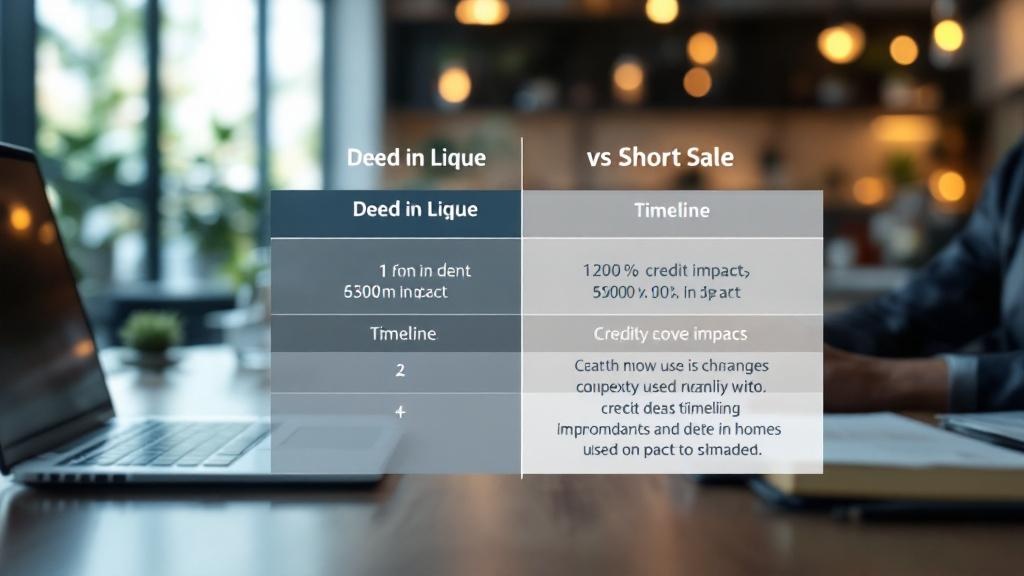
| Factor | Deed in Lieu | Short Sale |
|---|---|---|
| Timeline | 90-120 days | 6-12 months |
| Credit Impact | 85-160 point drop | 50-130 point drop |
| Homeowner Control | Limited | Moderate |
| Equity Recovery | None | Possible |
| Marketing Required | No | Yes |
Credit impact analysis shows short sales typically cause smaller credit score reductions than deed in lieu, averaging 50-130 points compared to 85-160 points for deed in lieu. However, individual results vary based on payment history leading up to the transaction and post-transaction credit management.
Homeowner effort requirements differ substantially between options. Short sales demand significant time investment in property preparation, marketing coordination, buyer communication, and lender negotiation. Deed in lieu requires minimal ongoing homeowner involvement after initial application approval.
### Loan Modification Options
Loan modifications allow homeowners to remain in their properties by restructuring payment terms, interest rates, or principal balances. Unlike deed in lieu, modifications preserve homeownership while addressing affordability issues through sustainable payment adjustments.
Government programs like the Home Affordable Modification Program (HAMP) and proprietary lender modifications offer different approaches to payment reduction. HAMP modifications target payment reductions to 31% of gross monthly income, while proprietary modifications vary by lender policies and investor requirements.
Qualification differences favor modifications for homeowners with temporary financial hardships versus the permanent hardships typically required for deed in lieu approval. Modifications work best when homeowners can demonstrate ability to maintain modified payments long-term.
Success rates for loan modifications vary significantly by servicer and loan type. According to the Office of the Comptroller of the Currency, approximately 60% of modified loans remain current after 12 months, with variations based on modification type and borrower circumstances.
### Cash Sale Benefits
Cash sales to investor buyers offer immediate resolution while potentially preserving homeowner equity that would be lost through deed in lieu. Professional cash buyers can close transactions within 7-14 days, providing faster resolution than deed in lieu processes.
Equity preservation represents the primary advantage of cash sales over deed in lieu. Even properties worth less than mortgage balances may generate cash for homeowners after negotiating payoffs with lenders, compared to zero recovery through deed in lieu agreements.
Speed advantages of cash sales eliminate lengthy lender approval processes required for deed in lieu. Cash buyers evaluate properties quickly and provide firm offers within 24-48 hours, allowing homeowners to make informed decisions about proceeding with sales versus pursuing deed in lieu.
Market condition independence characterizes cash sales, as investor buyers purchase properties regardless of local market conditions that might influence lender willingness to accept deed in lieu. This reliability provides homeowners with guaranteed alternatives to deed in lieu proceedings.
California Deed in Lieu Laws
California Civil Code provides specific consumer protections for deed in lieu transactions, including disclosure requirements, cancellation rights, and anti-deficiency protections that differ from other states’ regulations.
California’s regulatory framework for deed in lieu transactions includes specific consumer protection measures designed to prevent lender abuse and ensure homeowners understand the consequences of voluntary property transfers. These laws supplement federal regulations and provide additional safeguards.
### State-Specific Requirements
California Civil Code Section 2924c requires lenders to provide detailed disclosures before accepting deed in lieu agreements. These disclosures must explain the consequences of deed transfer, potential tax implications, and alternatives that homeowners should consider before proceeding.
Waiting period requirements mandate minimum timeframes between homeowner requests and deed acceptance. Lenders cannot accept deeds immediately after initial homeowner contact, ensuring borrowers have adequate time to explore alternatives and seek professional counseling about their options.
Right to cancel provisions allow homeowners to withdraw deed in lieu agreements within specified timeframes after signing. This cooling-off period recognizes that homeowners facing foreclosure may feel pressured to make hasty decisions without fully considering long-term consequences.
Anti-deficiency protections under California Code of Civil Procedure Section 580b apply to deed in lieu transactions for owner-occupied properties, preventing lenders from pursuing borrowers for deficiency balances after deed acceptance. These protections provide significant financial security for qualifying homeowners.
### Timeline and Process
California deed in lieu timelines typically require 60-90 days minimum from initial application to completion, with additional time for complex cases involving multiple liens or title issues. This extended timeline ensures compliance with state disclosure and waiting period requirements.
Notice requirements mandate specific communications to homeowners at various process stages. Lenders must provide written confirmations of application receipt, status updates during review periods, and final approval or denial notifications with detailed explanations of decisions.
Documentation standards require comprehensive record-keeping by lenders, including evidence of homeowner counseling opportunities, financial hardship verification, and good faith efforts to pursue alternatives before deed in lieu approval. These records support regulatory compliance and consumer protection.
Completion procedures involve title company coordination, final deed preparation, and recording with county recorders’ offices. California requires specific deed language acknowledging voluntary transfer and compliance with state consumer protection requirements.
Alternatives to Deed in Lieu
Before pursuing deed in lieu, homeowners should evaluate cash sales, bankruptcy protection, and forbearance options that might provide better financial outcomes while addressing foreclosure concerns through different approaches.
Exploring alternatives to deed in lieu ensures homeowners choose the most appropriate solution for their specific circumstances. Different alternatives provide varying levels of equity preservation, credit protection, and timeline flexibility that may better serve individual needs.
### Quick Cash Sale Option
Cash sale alternatives offer homeowners the opportunity to preserve equity while avoiding both foreclosure and deed in lieu proceedings. Professional cash buyers like First Choice Home Sale can evaluate properties quickly and provide competitive offers that may exceed net recovery from deed in lieu agreements.
Speed advantages of cash sales often exceed deed in lieu timelines. While deed in lieu requires 90-120 days for completion, cash sales can close in as few as 7 days, providing immediate resolution for urgent foreclosure situations.
Equity preservation through cash sales may provide homeowners with funds for relocation, debt reduction, or financial fresh starts. Even properties with limited equity may generate more cash through sales than the zero recovery typical of deed in lieu agreements.
No credit damage occurs through legitimate cash sales, as homeowners pay off mortgage balances through sale proceeds rather than negotiating debt forgiveness. This protection preserves future borrowing capacity for homeowners who may need financing for replacement housing.
### Chapter 13 Bankruptcy
Chapter 13 bankruptcy provides automatic stay protection that immediately halts foreclosure proceedings while homeowners reorganize their debts through court-supervised repayment plans. This option works best for homeowners with regular income who need time to catch up on mortgage arrearages.
Qualification requirements for Chapter 13 include regular income sufficient to support proposed repayment plans and debt levels below statutory limits. Secured debts cannot exceed $1,395,875, while unsecured debts must remain below $465,275 as of 2024 limits.
Payment plan structures typically extend 3-5 years and must demonstrate feasibility for completing mortgage arrearage payments while maintaining current mortgage payments. Successful completion results in discharge of remaining unsecured debts and retention of home ownership.
Comparison to deed in lieu shows Chapter 13 preserves homeownership while providing debt relief, but requires court supervision and successful plan completion. Failure to complete Chapter 13 plans may result in worse outcomes than proceeding directly with deed in lieu agreements.
### Loan Forbearance
Forbearance agreements provide temporary payment suspension or reduction while homeowners address short-term financial difficulties. Unlike deed in lieu, forbearance preserves homeownership and allows recovery without property transfer.
COVID-19 related forbearance programs expanded availability and reduced qualification requirements for many homeowners. Federal Housing Finance Agency (FHFA) programs for GSE loans and FHA forbearance options provided up to 18 months of payment relief during the pandemic.
Eligibility criteria for forbearance typically require demonstration of temporary hardship with reasonable expectation of income recovery. Homeowners must show ability to resume payments after forbearance periods end, either through return to original terms or modification agreements.
Exit strategies from forbearance include loan modifications, repayment plans, or lump-sum reinstatement of missed payments. Homeowners who cannot successfully exit forbearance may still pursue deed in lieu or other alternatives after forbearance periods expire.
For homeowners seeking immediate alternatives to deed in lieu, foreclosure prevention through cash sales offers guaranteed resolution with potential equity preservation. Professional evaluation helps determine whether cash sale proceeds can satisfy mortgage obligations while providing homeowners with funds for fresh starts.
Frequently Asked Questions
How does deed in lieu affect my credit score?
Deed in lieu typically reduces credit scores by 85-160 points, depending on your previous credit history. Recovery usually takes 2-4 years with proper credit management, compared to 3-7 years for completed foreclosure. The impact appears as “settled for less than full amount” rather than foreclosure on credit reports.
How long does the deed in lieu process take in California?
California deed in lieu processes typically require 90-120 days from application to completion, including mandatory waiting periods and disclosure requirements. This timeline assumes complete documentation and straightforward property title. Complex cases with multiple liens may require additional time for resolution.
Is deed in lieu better than foreclosure?
Deed in lieu generally provides faster resolution and less severe credit impact than foreclosure, completing in 90-120 days versus 6-18 months for foreclosure. However, homeowners lose all property equity through deed in lieu, while foreclosure might preserve some equity in strong markets.
Can I be charged taxes on debt forgiveness from deed in lieu?
Yes, forgiven mortgage debt through deed in lieu may be considered taxable income under IRS regulations. The amount equals the difference between the outstanding loan balance and property fair market value. Consult a tax professional before proceeding to understand potential tax obligations.
What happens to second mortgages or home equity lines in deed in lieu?
Junior liens typically remain as homeowner obligations after deed in lieu completion unless specifically negotiated otherwise. Lenders usually require clear title before accepting deeds, meaning second mortgages must be resolved separately through negotiation or payment.
Do I need an attorney for deed in lieu proceedings?
While not legally required, attorney representation helps ensure proper contract terms, tax implication understanding, and protection of homeowner rights. Legal fees typically range from $1,500-$3,500 for deed in lieu representation, much less than foreclosure defense costs.
Ready to Explore Your Options?
Don’t let foreclosure be your only choice. First Choice Home Sale offers fast, fair cash offers that might preserve more of your equity than deed in lieu. We buy houses in any condition throughout Orange County.
Get your free cash offer today: (866) 643-5829
First Choice Home Sale – Your trusted partner in foreclosure prevention.
Understanding deed in lieu of foreclosure provides homeowners with valuable knowledge about this foreclosure alternative, but it’s essential to explore all available options before making final decisions. While deed in lieu offers faster resolution than traditional foreclosure, the complete loss of property equity makes it crucial to evaluate alternatives like cash sales that might provide better financial outcomes. California’s consumer protection laws provide important safeguards, but homeowners benefit from professional guidance to navigate complex decisions during financial hardship. Whether pursuing deed in lieu or exploring other foreclosure alternatives, acting quickly and seeking expert advice helps ensure the best possible resolution for challenging situations.