
When you need to sell house as-is in Orange County, you’re looking for a solution that eliminates the stress, time, and expense of home repairs. Whether your property has structural damage, outdated features, or environmental issues, as-is sales provide a direct path to closing without the traditional hassles of home improvement projects.
Get Your As-Is Cash Offer Today
First Choice Home Sale buys houses in any condition throughout Orange County. No repairs needed, no inspections, no waiting. Call (866) 643-5829 for your free property evaluation and cash offer within 24 hours.
Key Takeaways
- As-is sales eliminate repair costs averaging $15,000-$50,000 for distressed properties
- Cash buyers can close as-is transactions in 7-14 days versus 30-45 days for traditional sales
- Sellers avoid inspection contingencies but must still comply with California disclosure laws
- As-is properties typically sell for 60-80% of after-repair value (ARV)
- Perfect solution for fire damage, water damage, mold issues, and structural problems
- First Choice Home Sale evaluates Orange County properties within 24-48 hours
What Does ‘As-Is’ Mean in Real Estate?
Selling a house as-is means the property transfers to the buyer in its current condition without any repairs, improvements, or warranties from the seller. The buyer accepts all existing problems and assumes responsibility for future maintenance needs.
The term “as-is” represents a fundamental shift in the traditional home selling process. When you sell my house as-is, you’re explicitly stating that no improvements will be made before closing. This approach attracts cash buyers and investors who specialize in purchasing distressed properties.
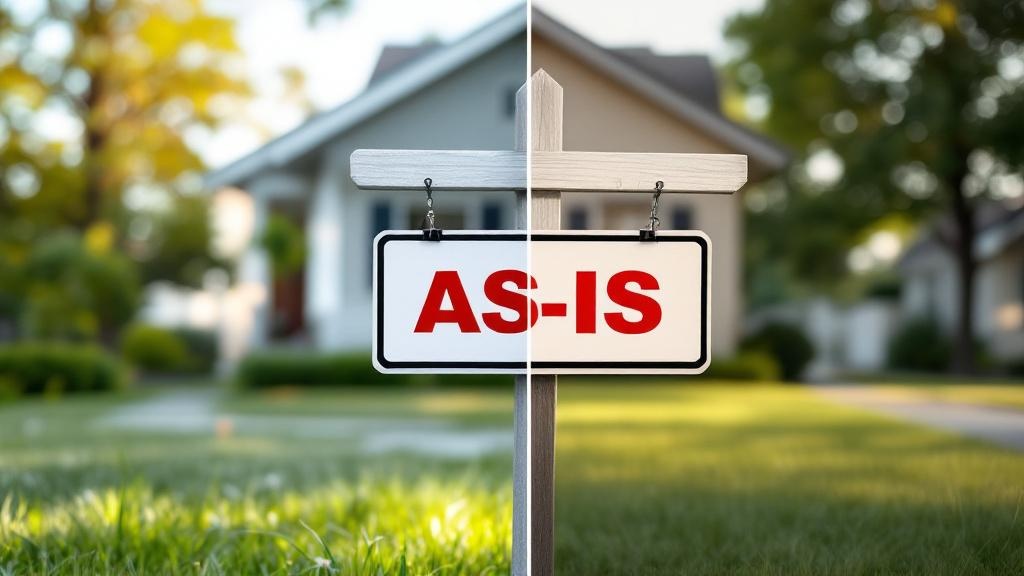
According to the National Association of Realtors, approximately 23% of home sales involve some form of as-is arrangement, particularly in markets with older housing stock or properties requiring significant repairs.
The as-is designation provides legal protection for sellers while creating opportunities for buyers seeking investment properties or homeowners willing to tackle renovation projects. This arrangement works particularly well when repair costs exceed the seller’s financial capacity or timeline constraints.
Legal Definition and Implications
California real estate law recognizes as-is sales as legally binding agreements where buyers waive their right to request repairs based on inspection findings. The Civil Code Section 1102 series governs these transactions, establishing clear guidelines for seller protections and buyer responsibilities.
“Under California Civil Code Section 1102.2, as-is clauses limit seller liability for property defects discovered after closing, provided all required disclosures were completed accurately.” – California Department of Real Estate
The legal framework protects sellers from future claims related to property conditions that existed at the time of sale. However, as-is clauses don’t eliminate disclosure requirements. Sellers must still provide accurate information about known defects, environmental hazards, and material facts affecting property value.
Buyers in as-is transactions typically conduct inspections for informational purposes rather than negotiation leverage. If significant issues surface during inspections, buyers can withdraw from the transaction but cannot demand repairs or price reductions.
This legal structure makes as-is sales attractive to sellers with limited resources for repairs while providing buyers with reduced competition and faster closing timelines. The arrangement requires clear communication and documentation to ensure both parties understand their obligations.
As-Is vs Traditional Sales
The differences between as-is and traditional sales extend far beyond repair responsibilities. Traditional sales typically involve multiple rounds of negotiations, inspection periods, and repair requests that can delay closing for weeks or months.

| Aspect | Traditional Sale | As-Is Sale |
|---|---|---|
| Timeline | 30-45 days | 7-14 days |
| Repairs Required | Based on inspection | None |
| Buyer Pool | Retail buyers | Cash investors |
| Inspection Contingency | Standard | Informational only |
| Average Sale Price | 95-98% of market value | 60-80% of ARV |
Traditional sales favor sellers with well-maintained properties who can afford pre-sale improvements. As-is sales benefit owners of distressed properties who prioritize speed and certainty over maximum sale price. The choice depends on individual circumstances, property condition, and financial objectives.
Benefits of Selling As-Is
As-is sales offer homeowners freedom from repair costs, faster closing timelines, and elimination of inspection-related delays. This approach provides certainty and convenience for sellers dealing with distressed properties or time constraints.
The primary advantage of choosing to sell house any condition lies in the immediate relief from financial and logistical burdens associated with property improvements. Homeowners facing foreclosure, inheritance situations, or relocation deadlines find as-is sales particularly beneficial.
Market data from Orange County shows as-is sales closing 75% faster than traditional listings, with average timelines of 12 days versus 42 days for conventional transactions. This speed advantage becomes crucial for sellers with urgent financial needs or deadline pressures.
No Repair Costs or Hassles
Avoiding repair expenses represents the most significant financial benefit of as-is sales. According to U.S. Census Bureau data, homeowners spend an average of $18,000 annually on maintenance and improvements, with major repairs often exceeding $50,000 for distressed properties.

“The average cost to renovate a distressed property ranges from $25,000 to $75,000, depending on the extent of damage and local labor costs.” – Joint Center for Housing Studies, Harvard University
Beyond financial savings, eliminating repairs removes logistical headaches including contractor coordination, permit applications, and construction oversight. Sellers avoid the stress of managing multiple trades, dealing with unexpected complications, and ensuring work meets code requirements.
Time savings prove equally valuable, as major repairs can extend the selling timeline by 2-6 months. Foundation work, electrical upgrades, and environmental remediation projects often face scheduling delays and inspection requirements that further complicate the process.
The emotional relief of avoiding repair decisions, contractor negotiations, and construction disruptions cannot be understated. Many sellers find the certainty of an as-is transaction preferable to the uncertainty of renovation outcomes and costs.
Faster Closing Timeline
Speed represents a critical advantage for sellers needing quick liquidity or facing time-sensitive situations. Cash buyers specializing in as-is properties can typically close within 7-14 days, compared to 30-45 days for traditional financed purchases.
The accelerated timeline results from eliminating financing contingencies, appraisal requirements, and repair negotiations. Cash buyers conduct their due diligence upfront and commit to purchasing regardless of inspection findings, provided the property matches their initial evaluation.
First Choice Home Sale completes property evaluations within 24-48 hours and can close as quickly as 7 days when clear title is available. This speed helps sellers avoid foreclosure, capitalize on relocation opportunities, or address urgent financial needs.
Emergency situations like divorce, job loss, or medical expenses often require immediate asset liquidation. As-is sales provide the fastest legitimate method for converting real estate equity into cash without the delays inherent in traditional marketing approaches.
Avoiding Inspection Issues
Traditional sales often stall when inspections reveal problems requiring negotiation. Even minor issues can become deal-breakers if buyers request extensive repairs or significant price concessions. As-is sales eliminate these potential complications entirely.
Inspection contingencies in traditional contracts give buyers substantial leverage to renegotiate terms or terminate agreements. Properties with known issues face higher risks of deal failure as inspection results confirm or reveal additional problems.
As-is buyers conduct inspections for informational purposes only, helping them understand renovation requirements and costs. Since they’re committed to purchasing regardless of findings, sellers avoid the uncertainty and frustration of repair negotiations.
The elimination of inspection-related delays and complications provides sellers with greater certainty about closing outcomes. Once an as-is offer is accepted, the probability of successful closing increases significantly compared to traditional transactions.
Types of Properties Perfect for As-Is Sales
Properties with structural damage, fire or water damage, environmental hazards, outdated systems, or tenant occupancy issues are ideal candidates for as-is sales. These conditions often require substantial investment that makes traditional selling impractical.
Certain property conditions make as-is sales not just preferable but necessary for practical and financial reasons. When you need to sell fixer upper properties, the cost and complexity of repairs often exceed the seller’s capacity or timeline requirements.

Properties requiring more than $25,000 in improvements typically benefit from as-is sales, as the cost and time investment in repairs may not yield proportional returns in final sale price. The decision depends on local market conditions, repair costs, and seller circumstances.
Structural Issues and Foundation Problems
Foundation problems represent one of the most expensive categories of home repairs, with costs ranging from $15,000 for minor settling to $100,000 or more for major structural work. These issues often require specialized contractors, engineering consultations, and extended construction timelines.
According to the American Society of Civil Engineers, foundation repair projects typically require 4-8 weeks to complete, not including permit approval time which can add another 2-4 weeks to the process.
Common structural problems include foundation cracks, settling issues, beam damage, and inadequate support systems. Older properties in Orange County frequently experience foundation movement due to soil conditions and seismic activity over time.
Repair costs vary significantly based on problem severity and accessibility. Simple crack repairs might cost $3,000-$8,000, while major foundation replacement can exceed $75,000. Engineering reports alone cost $1,500-$3,500, adding complexity to the repair process.
Structural issues often trigger additional problems including plumbing disruption, flooring damage, and cosmetic repairs throughout the affected areas. The cascading effect of foundation work can double or triple initial repair estimates.
Buyers specializing in as-is properties have established relationships with structural contractors and understand true repair costs. They can evaluate these properties accurately and provide fair offers based on realistic renovation budgets.
Fire and Water Damage
Fire and water damage create complex restoration challenges that extend far beyond visible destruction. Insurance complications, permitting requirements, and environmental concerns make these properties ideal for as-is sales.
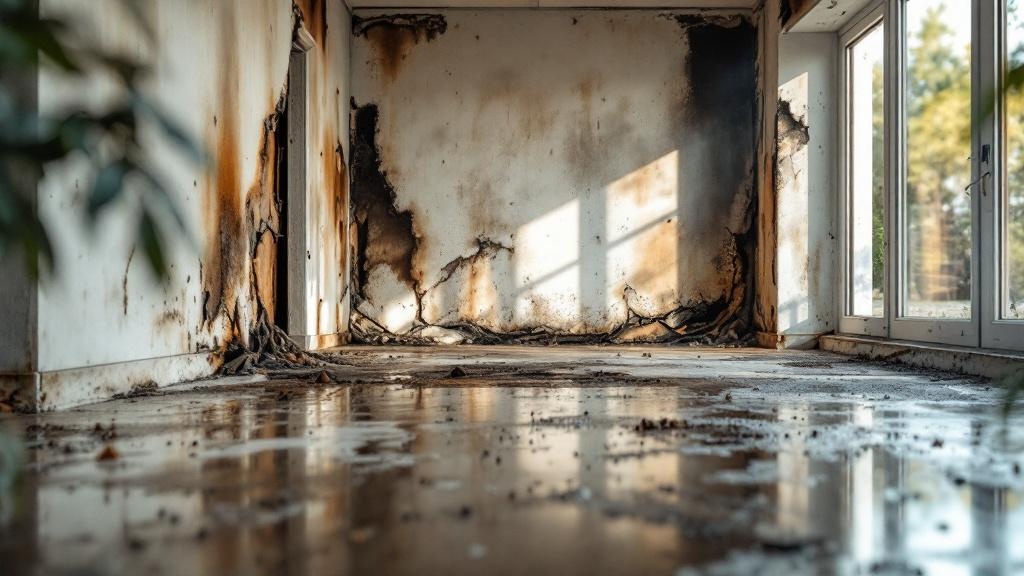
Water damage restoration costs average $2,700-$7,500 for minor incidents, but can exceed $50,000 when structural drying, mold remediation, and system replacements are required. Fire damage restoration typically starts at $20,000 and can reach $200,000 for severe incidents.
Insurance settlements often provide partial coverage, leaving homeowners responsible for substantial out-of-pocket expenses. Navigating insurance claims while coordinating restoration work creates additional stress and complexity for property owners.
Environmental testing for smoke residue, water contamination, and mold growth adds $1,500-$4,000 to restoration costs. Remediation requirements may include specialized cleaning, air filtration systems, and material replacement throughout affected areas.
For fire damaged property cash sale options and water damage house sale solutions, First Choice Home Sale provides specialized expertise in evaluating and purchasing damaged properties quickly.
Cosmetic Issues and Outdated Features
Properties with extensive cosmetic issues or severely outdated features often benefit from as-is sales when renovation costs approach or exceed $30,000. Kitchens and bathrooms from the 1970s-1980s typically require complete renovations costing $25,000-$75,000 combined.
Outdated electrical systems, original hardwood floors requiring refinishing, and homes needing complete painting inside and out represent substantial investments. When multiple cosmetic issues exist simultaneously, total renovation costs can easily exceed $50,000.
Market preferences for move-in ready properties make cosmetically challenged homes difficult to sell traditionally. Buyers often request significant price concessions that approach or exceed the cost of improvements, reducing seller net proceeds.
As-is buyers understand renovation costs and market values for updated properties. They can provide competitive offers that reflect true property potential while relieving sellers of improvement responsibilities and uncertainties.
Tenant-Occupied Properties
Selling tenant-occupied properties traditionally presents unique challenges including showing restrictions, tenant cooperation issues, and potential relocation costs. California tenant protection laws add complexity to the process.
Tenants have rights regarding showing schedules, lease continuity, and relocation assistance in certain situations. These protections can significantly limit marketing opportunities and extend selling timelines for traditional buyers.
As-is buyers often prefer tenant-occupied properties as rental investments or plan renovations that naturally coincide with lease expirations. They understand tenant rights and can work within existing lease agreements or provide appropriate relocation assistance.
The rental income stream provides immediate returns for investor buyers while sellers avoid the complications of tenant management during the selling process. This arrangement benefits all parties when handled properly.
Sell Your Problem Property Fast
Don’t let property issues hold you back. First Choice Home Sale specializes in purchasing distressed properties throughout Orange County. We handle fire damage, water damage, structural issues, and more. Call (866) 643-5829 for your no-obligation cash offer today.
How As-Is Sales Work
As-is sales begin with property evaluation, followed by cash offer presentation, acceptance negotiation, and closing coordination. The entire process typically completes within 7-14 days from initial contact to deed transfer.
The streamlined nature of as-is transactions eliminates many traditional selling complications while requiring careful attention to legal documentation and disclosure requirements. Understanding each phase helps sellers prepare effectively and set realistic expectations.
Professional as-is buyers like First Choice Home Sale have systematic approaches that maximize efficiency while ensuring legal compliance. The process prioritizes speed and certainty while maintaining transparency throughout all phases.
The Evaluation Process
Property evaluation represents the foundation of successful as-is transactions. Buyers must assess current condition, repair requirements, market value, and investment potential to formulate competitive offers that work for all parties.
Initial evaluations often begin with remote assessment using online photos, property records, and tax information. Detailed inspections follow for properties meeting preliminary criteria, focusing on structural integrity, system functionality, and environmental concerns.
Professional evaluators examine foundation conditions, roof integrity, electrical and plumbing systems, HVAC functionality, and environmental hazards. They document issues requiring immediate attention versus those affecting long-term property value.
Market analysis considers recent sales of similar properties, neighborhood trends, and anticipated renovation costs. The evaluation process typically requires 2-4 hours for comprehensive assessment of average-sized properties.
Technology tools including moisture meters, electrical testers, and thermal imaging cameras help identify hidden problems that might not be visible during standard walk-through inspections. This thorough approach ensures accurate offer calculations.
Cash Offer Calculation
Cash offers for as-is properties follow established formulas that consider after-repair value (ARV), renovation costs, carrying expenses, and investor profit margins. Understanding this calculation helps sellers evaluate offer competitiveness.
The standard formula begins with ARV (After Repair Value) – the property’s market value after complete renovation. Recent comparable sales of similar updated properties establish ARV baselines for specific neighborhoods and property types.
| Component | Percentage of ARV | Example ($300,000 ARV) |
|---|---|---|
| After Repair Value | 100% | $300,000 |
| Renovation Costs | 15-25% | -$60,000 |
| Holding Costs | 2-4% | -$9,000 |
| Transaction Costs | 3-5% | -$12,000 |
| Profit Margin | 15-20% | -$45,000 |
| Cash Offer | 58-65% | $174,000 |
Renovation costs include materials, labor, permits, and contingency reserves for unexpected problems. Holding costs cover property taxes, insurance, utilities, and financing expenses during renovation periods.
Transaction costs encompass purchase expenses, title insurance, escrow fees, and eventual resale costs. Profit margins compensate investors for risk, expertise, and capital investment in the project.
Closing Process
As-is closings follow standard real estate procedures but move faster due to eliminated contingencies and cash financing. Title companies coordinate document preparation, fund transfers, and deed recordings within compressed timeframes.
Required documentation includes purchase agreements, disclosure statements, title insurance policies, and deed transfers. Sellers must provide clear title or work with buyers to resolve any encumbrances discovered during title searches.
Cash buyers typically deposit earnest money within 24-48 hours of agreement execution, demonstrating commitment and facilitating faster processing. Title companies prioritize cash transactions due to reduced complexity and guaranteed funding.
Final walk-throughs occur 1-2 days before closing to confirm property condition remains consistent with evaluation findings. Since no repairs are expected, this inspection focuses on ensuring no additional damage has occurred.
Fund transfers happen electronically on closing day, with proceeds available to sellers immediately after deed recording. The entire process from agreement to closing typically requires 7-14 business days for clear title properties.
Pricing Your As-Is Property
As-is pricing requires understanding the gap between current condition and market value, typically resulting in offers 60-80% of after-repair value. Accurate repair cost estimates and comparable sales analysis inform realistic price expectations.
Pricing distressed properties requires different approaches than traditional real estate valuation. Sellers must understand how repair costs, market conditions, and buyer profit requirements affect final offers when they sell house no repairs.
Realistic expectations prevent disappointment while ensuring sellers recognize fair offers when presented. The key lies in understanding investor perspectives and market dynamics affecting as-is property values.
Market Value vs As-Is Value
The gap between full market value and as-is value reflects repair costs, risk premiums, and investor profit requirements. This difference typically ranges from 20-40% of the property’s potential value, depending on condition severity.
Properties requiring minor cosmetic updates might sell for 85-90% of market value, while those needing major structural work may only achieve 60-70% of ARV. Environmental issues or code violations can further reduce as-is values.
| Property Condition | Repair Cost Range | As-Is Value % of ARV |
|---|---|---|
| Cosmetic Issues Only | $5,000-$15,000 | 80-90% |
| System Updates Needed | $15,000-$35,000 | 70-80% |
| Major Repairs Required | $35,000-$75,000 | 60-70% |
| Structural/Environmental | $75,000+ | 50-60% |
Market conditions also influence the value gap. Strong seller’s markets may reduce discounts while buyer’s markets can increase them. Local demand for investment properties affects competitive pressure among as-is buyers.
Understanding these dynamics helps sellers set realistic expectations and recognize competitive offers. Professional as-is buyers provide transparency about their calculation methods to build trust and facilitate negotiations.
Repair Cost Estimates
Accurate repair cost estimation forms the foundation of realistic pricing expectations. Sellers should obtain preliminary contractor quotes for major issues to understand the scope and expense of necessary improvements.
“According to HomeAdvisor, the national average for major home renovations ranges from $18,000 for kitchen updates to $65,000 for whole-house renovations, with costs varying significantly by region and project scope.” – HomeAdvisor 2023 Cost Guide
Common repair categories include structural work ($15,000-$75,000), roofing ($8,000-$25,000), HVAC systems ($5,000-$15,000), electrical updates ($3,000-$12,000), and plumbing repairs ($2,000-$10,000). Multiple issues compound costs significantly.
Labor costs in Orange County typically run 20-30% above national averages due to higher wages and regulatory requirements. Permit fees, inspection costs, and material delivery charges add 10-15% to basic repair estimates.
Contingency reserves of 15-20% account for unexpected problems discovered during renovation work. Older properties frequently reveal additional issues once repairs begin, making conservative estimates essential for accurate valuation.
Legal Considerations
California law requires sellers to disclose known defects even in as-is sales, while buyers waive rights to request repairs. Proper documentation protects both parties and ensures legally compliant transactions.
Legal compliance in as-is sales requires understanding disclosure obligations, title requirements, and contractual protections. While as-is clauses limit seller repair obligations, they don’t eliminate all legal responsibilities.
Working with experienced professionals ensures proper documentation and compliance with California real estate law. Shortcuts or inadequate legal preparation can create liability exposure for sellers and complications for buyers.
Disclosure Requirements in California
California Civil Code Section 1102 mandates comprehensive property disclosures regardless of as-is sale conditions. Sellers must provide accurate information about known defects, environmental hazards, and material facts affecting property value.
Required disclosures include the Transfer Disclosure Statement (TDS), Natural Hazard Disclosure Statement (NHD), and Lead-Based Paint Disclosure for pre-1978 properties. Additional disclosures may apply based on property location and characteristics.
The TDS requires sellers to disclose known problems with electrical, plumbing, heating, structural, and other property systems. Environmental hazards including mold, asbestos, and contamination must be reported if known to exist.
Failure to provide accurate disclosures can result in transaction cancellation, financial liability, and legal action even when properties are sold as-is. Disclosure obligations continue despite repair limitations in as-is arrangements.
Professional as-is buyers understand disclosure requirements and work with sellers to complete necessary documentation properly. They rarely pursue legal action over disclosed conditions since they’re purchasing with full knowledge of existing problems.
As-Is Sale vs Other Options
As-is sales offer speed and convenience but typically yield lower proceeds than traditional listings. The choice depends on property condition, timeline requirements, financial capacity, and risk tolerance for repair investments and market uncertainties.
Comparing selling options helps homeowners make informed decisions based on their specific circumstances and priorities. Each approach offers distinct advantages and disadvantages depending on property condition and seller objectives.
The optimal choice balances financial returns, time constraints, stress levels, and risk tolerance. Properties in excellent condition typically benefit from traditional sales while distressed properties favor as-is approaches.
Traditional Listing
Traditional MLS listings provide maximum market exposure and competitive bidding opportunities that can achieve 95-98% of full market value. However, this approach requires property preparation, longer timelines, and greater uncertainty.
Pre-listing improvements for distressed properties often cost $15,000-$50,000 or more, with no guarantee that renovation investments will be recovered through higher sale prices. Market conditions and buyer preferences significantly influence renovation returns.
Traditional sales require 30-90 days for marketing and closing, with additional time needed for property preparation. Inspection negotiations and repair requests can extend timelines further or result in deal failure.
Agent commissions (5-6%), closing costs (2-3%), and repair expenses reduce net proceeds significantly. When combined with holding costs during extended marketing periods, traditional sales may not yield substantially higher net returns than as-is alternatives.
FSBO and Auction Alternatives
For Sale By Owner approaches can save commission costs but require substantial time, expertise, and marketing investment from property owners. Legal compliance, contract negotiation, and closing coordination present significant challenges.
Real estate auctions create competitive bidding environments that can achieve quick sales, but outcomes remain unpredictable. Auction costs, reserve prices, and bidder attendance significantly influence results.
As-is sales to professional buyers provide more predictable outcomes with lower marketing costs and guaranteed closings. For specialized situations, direct sales often prove more effective than alternative approaches.
Common As-Is Property Issues
Properties requiring as-is sales typically suffer from environmental hazards, outdated mechanical systems, structural damage, or deferred maintenance. These issues often require specialized expertise and substantial capital investment that makes traditional selling impractical.
Understanding common problems that drive as-is sale decisions helps sellers identify when this approach makes sense. Certain issues create such substantial repair requirements that traditional selling becomes financially unfeasible.
Professional as-is buyers specialize in evaluating and resolving complex property issues that discourage traditional buyers. Their expertise and capital resources enable them to purchase properties that conventional buyers would reject.
Mold and Environmental Hazards
Mold contamination represents one of the most serious environmental hazards affecting residential properties. Remediation costs range from $5,000 for minor surface issues to $50,000 or more for extensive structural contamination requiring complete material replacement.
According to the Environmental Protection Agency, mold growth affects 43% of homes nationwide, with moisture intrusion being the primary cause. Professional testing costs $300-$800, followed by remediation that can take 3-10 days depending on contamination extent.
Asbestos and lead paint present additional environmental challenges in homes built before 1980. Asbestos abatement costs $15,000-$30,000 for whole-house remediation, while lead paint removal ranges from $8,000-$15,000 for comprehensive treatment.
Environmental issues often require specialized contractors with proper licensing and insurance coverage. The regulatory compliance requirements and health risks make these properties unsuitable for traditional buyers but attractive to experienced investors.
Outdated Mechanical Systems
HVAC systems over 15 years old often require replacement costing $8,000-$15,000 for standard installations. Electrical panels from the 1970s-1980s need upgrades costing $3,000-$8,000 to meet current safety codes.
Plumbing systems with galvanized pipes require complete replacement averaging $12,000-$20,000 for whole-house re-piping. These mechanical issues often exist simultaneously in older properties, creating substantial combined repair costs.
Professional as-is buyers maintain relationships with mechanical contractors and understand true replacement costs. They can evaluate these properties accurately and provide offers that reflect realistic renovation requirements.
Frequently Asked Questions
How quickly can I sell my house as-is in Orange County?
As-is sales through cash buyers like First Choice Home Sale typically close within 7-14 days. Traditional as-is listings may take 30-60 days depending on buyer interest and financing requirements.
Do I still need to disclose problems in an as-is sale?
Yes, California law requires sellers to disclose all known defects regardless of as-is conditions. The Transfer Disclosure Statement and other required disclosures must be completed accurately to avoid legal liability.
How much less will I receive for selling as-is?
As-is properties typically sell for 60-80% of after-repair value, depending on condition severity and required improvements. Properties needing only cosmetic work may achieve 80-90% while those requiring major structural repairs may only receive 50-60% of ARV.
Can I sell an inherited property as-is?
Yes, inherited properties are excellent candidates for as-is sales, especially when beneficiaries lack funds for repairs or live out of state. The probate process can be coordinated with as-is sales to expedite estate settlement.
What types of buyers purchase as-is properties?
Cash investors, house flippers, rental property owners, and companies like First Choice Home Sale specialize in as-is purchases. These buyers have expertise in property renovation and can close quickly without financing contingencies.
Are there any repair requirements for as-is sales?
No repairs are required from sellers in as-is transactions. However, some municipal code violations may require resolution before title transfer. Professional buyers typically handle these issues as part of their acquisition process.
How do as-is buyers determine their offers?
As-is offers are calculated using After Repair Value minus renovation costs, holding expenses, transaction fees, and profit margins. This typically results in offers ranging from 60-80% of the property’s potential market value.
Can I negotiate an as-is offer?
Yes, as-is offers can be negotiated based on closing timeline, included personal property, or specific terms. However, repair requests are typically not accepted since the buyer is purchasing in current condition.
Ready to Sell Your Orange County Home As-Is?
Stop worrying about repairs and start planning your next chapter. First Choice Home Sale provides fair cash offers for properties in any condition throughout Orange County. We handle all the paperwork, close quickly, and pay all closing costs. Call (866) 643-5829 now for your free property evaluation and discover how much your as-is home is worth today.