Selling house with foundation issues presents unique challenges requiring strategic planning and expert guidance. Foundation problems affect approximately 25% of homes nationwide and significantly impact marketability and sale price. Whether you choose to repair foundation damage or sell as-is depends on repair costs, market conditions, and timeline constraints. First Choice Home Sale buys houses with foundation problems in Orange County California, providing homeowners immediate cash solutions when traditional sales become complicated by structural issues.
Get Your Cash Offer Today
Dealing with foundation problems? We buy houses as-is with foundation issues. No repairs needed, no delays, no hassles.
Call First Choice Home Sale: (866) 643-5829
Key Takeaways
- Foundation repairs cost between $3,000-$50,000 depending on damage severity and home size
- California law requires disclosure of known foundation issues per Civil Code 1102
- Cash buyers accept foundation problems more readily than traditional financed buyers
- Professional foundation inspection costs $400-$1,200 but provides crucial selling strategy information
- Multiple expert opinions help determine accurate repair costs and optimal selling approach
- Marketing strategy must target appropriate buyer segments based on foundation problem severity
Understanding Foundation Issues in Home Sales
Foundation issues significantly impact home sales by reducing buyer pool, requiring extensive disclosures, and typically decreasing property values by 10-20% below market rate depending on repair severity and local market conditions.
Foundation problems represent one of the most serious concerns for both sellers and buyers in real estate transactions. According to the U.S. Census Bureau, approximately 20-25% of homes experience foundation settlement or structural issues during their lifespan. These problems create substantial financial and logistical challenges that can derail traditional sales processes.
The financial impact varies dramatically based on severity and location. Minor cosmetic cracks might require $500-$3,000 in repairs, while major structural problems can demand $15,000-$50,000 investments.
“Foundation repairs represent the highest-cost structural issue homeowners face, with major settlement problems averaging $25,000 nationwide according to foundation industry data.”
Foundation problems affect marketability multiple ways. Traditional buyers often struggle to secure financing when lenders identify structural concerns during appraisals. FHA and VA loans typically require foundation repairs before closing, creating timeline delays and additional costs. Conventional loan programs may reject properties with significant structural defects entirely.
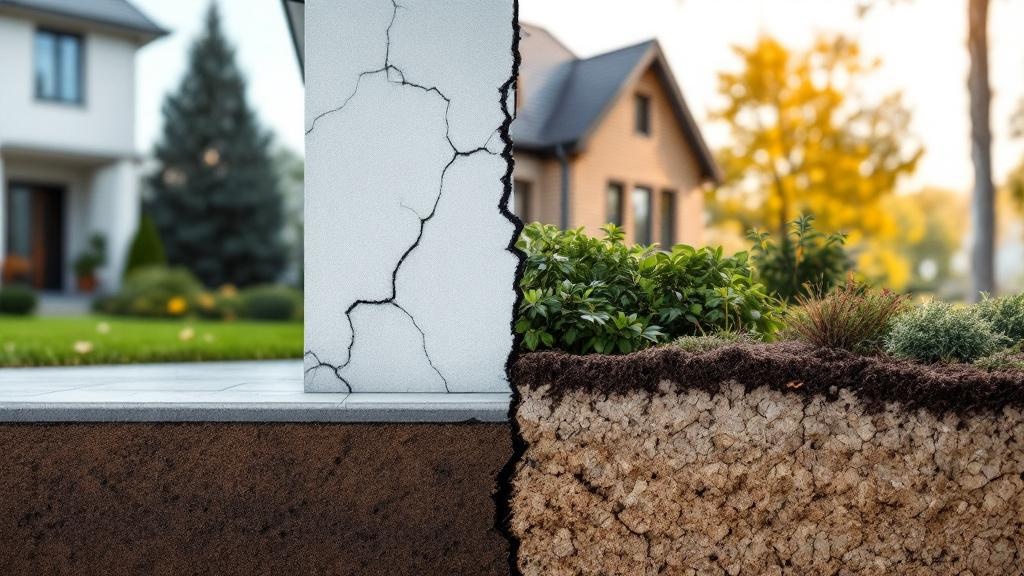
Types of Foundation Problems
Foundation issues manifest in various forms, each requiring different repair approaches and investment levels. Understanding specific problem types helps sellers make informed decisions about repair versus as-is sale strategies.
| Problem Type | Severity Level | Typical Repair Cost | Sale Timeline Impact |
|---|---|---|---|
| Cosmetic Cracks | Minor | $500-$3,000 | Minimal delay |
| Settlement Cracks | Moderate | $3,000-$15,000 | 30-60 day delay |
| Bowing Walls | Major | $10,000-$25,000 | 60-90 day delay |
| Slab Problems | Major | $15,000-$35,000 | 90+ day delay |
| Complete Replacement | Severe | $20,000-$50,000 | 120+ day delay |
Settlement cracks occur when soil conditions change beneath the foundation, causing uneven support and structural movement. These issues often worsen over time without professional intervention. Bowing basement walls indicate serious lateral pressure problems requiring immediate attention to prevent collapse.
Slab foundation problems affect single-story homes built on concrete slabs. These repairs often require extensive excavation and can disrupt entire home systems. Pier and beam foundation issues involve support structure problems that affect home stability and require specialized repair techniques.
Signs of Foundation Damage
Recognizing foundation problems early allows sellers to make informed decisions about repair timing and selling strategies. Both visible and hidden signs indicate potential structural concerns requiring professional evaluation.
Visible indicators include wall cracks wider than 1/4 inch, particularly horizontal or stair-step patterns in basement walls. Exterior foundation cracks, gaps around windows and doors, and uneven floors suggest settlement issues. Doors and windows that stick or won’t close properly often indicate structural movement.
Hidden signs require more careful observation. Plumbing problems in basement areas, unusual moisture patterns, and musty odors can indicate foundation water infiltration. Nail pops in drywall, ceiling cracks, and gaps between walls and ceilings suggest ongoing structural movement.
Professional evaluation becomes necessary when multiple signs appear simultaneously or when individual indicators exceed normal settling patterns. Early detection allows sellers to address problems before they worsen and impact sale negotiations more severely.
Foundation Inspection Process
Professional foundation inspection takes 2-4 hours, costs $400-$1,200, and provides detailed assessment of structural integrity, repair recommendations, and estimated costs essential for determining optimal selling strategy and disclosure requirements.
Foundation inspection represents a critical step in the selling process when structural concerns exist. According to industry statistics, 85% of buyers request foundation inspection for homes over 20 years old, making professional evaluation nearly inevitable in most transactions.
The inspection process begins with exterior evaluation of foundation walls, drainage systems, and soil conditions. Inspectors measure crack widths, document settlement patterns, and assess water damage indicators. Interior evaluation includes basement or crawl space examination, floor level measurements, and structural support assessment.
Professional inspectors use specialized equipment including laser levels, crack monitoring gauges, and moisture detection devices. Digital documentation provides detailed reports with photographs, measurements, and repair recommendations. These reports serve as essential disclosure documents and help establish realistic repair cost estimates.
What Inspectors Look For
Foundation inspectors follow systematic evaluation processes covering all structural elements and potential problem indicators. Their assessment determines problem severity and guides repair versus replacement decisions.
Structural integrity evaluation focuses on load-bearing capacity and stability indicators. Inspectors examine foundation walls for bowing, cracking, or displacement. Support beam assessment includes checking for sagging, damage, or inadequate support. Floor joist examination identifies structural movement or deterioration.
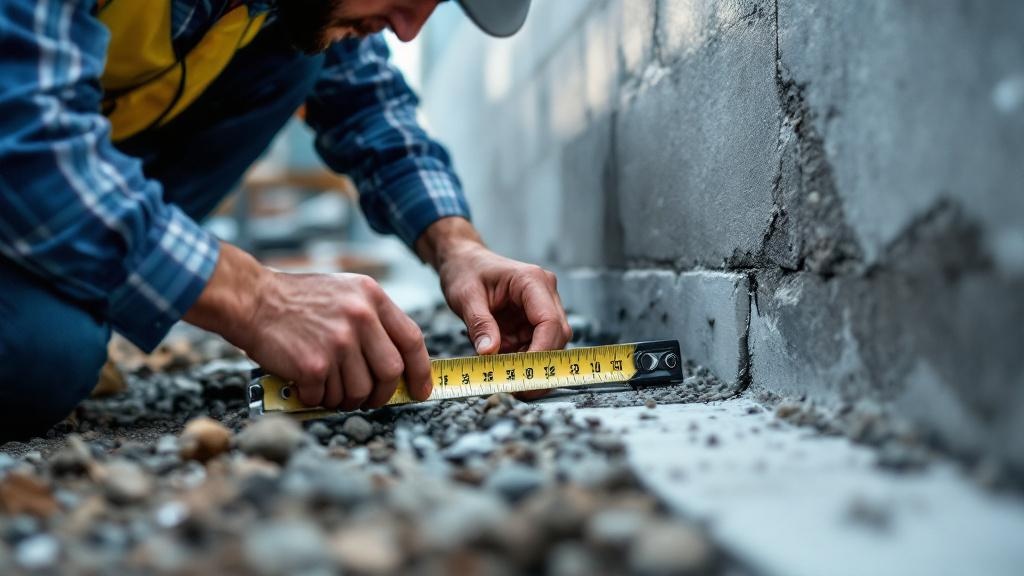
Crack measurement and classification determine repair urgency and methods. Hairline cracks under 1/8 inch typically indicate normal settling. Cracks between 1/8 and 1/4 inch require monitoring and potential sealing. Cracks exceeding 1/4 inch indicate structural movement requiring professional repair.
Water damage assessment examines moisture infiltration patterns and drainage effectiveness. Poor drainage causes ongoing foundation stress and can worsen existing problems. Inspectors evaluate gutters, downspouts, grading, and basement waterproofing systems.
Soil condition analysis considers factors affecting foundation stability. Clay soils expand and contract with moisture changes, creating ongoing pressure. Sandy soils may shift or wash away, reducing foundation support. Proper drainage and soil management prevent many foundation problems.
Foundation Inspection Costs
Foundation inspection costs vary based on evaluation depth and property complexity. Understanding cost structures helps sellers budget for comprehensive assessments needed for informed selling decisions.
| Inspection Type | Cost Range | Duration | When Needed |
|---|---|---|---|
| Basic Visual Inspection | $400-$800 | 2-3 hours | Minor concerns |
| Structural Engineer Evaluation | $600-$1,200 | 3-4 hours | Major problems |
| Specialized Testing | $200-$500 | 1-2 hours | Specific issues |
Basic inspections cover general structural assessment and identify obvious problems. These evaluations suit properties with minor concerns or routine pre-sale examinations. Structural engineer evaluations provide detailed analysis for complex problems requiring professional repair planning.
Specialized testing includes soil analysis, moisture testing, and structural load assessments. These services address specific concerns identified during basic inspection and provide detailed information for repair planning and cost estimation.
Avoid Expensive Foundation Repairs
Skip the hassle of foundation repairs and lengthy traditional sales. We buy houses with foundation problems for cash, closing in as little as 7 days.
Get Your Cash Offer: (866) 643-5829
Repair vs Sell As-Is Decision
The repair versus sell as-is decision depends on repair costs versus home value, available budget, timeline constraints, and local market conditions. Generally, repairs under $10,000 benefit sellers, while major foundation work favors as-is sales to investors.
This critical decision point determines selling strategy, timeline, and ultimate financial outcome. Multiple factors influence the optimal choice, requiring careful analysis of personal circumstances and market conditions.
Financial analysis compares repair costs against potential sale price increases. Minor repairs costing under $10,000 often return 80-100% of investment in increased sale price. Major repairs exceeding $20,000 typically return only 50-70% of investment, making as-is sales more attractive financially.
Market conditions significantly impact repair versus as-is decisions. Strong seller’s markets may justify repairs when buyer competition remains high despite foundation issues. Buyer’s markets often favor as-is sales to avoid competition with move-in-ready properties.
“According to real estate industry data, 60% of sellers choose as-is sales for major foundation issues exceeding $15,000 in repair costs.”
Timeline constraints often drive decision-making when sellers face foreclosure, job relocation, or other urgent circumstances. Foundation repairs typically require 30-120 days depending on complexity, while as-is cash sales can close within 7-14 days.
Foundation Repair Cost Analysis
Understanding repair cost structures helps sellers evaluate financial implications of different strategies. Costs vary significantly based on problem type, home size, soil conditions, and regional labor rates.
Minor crack repairs range from $500-$3,000 depending on crack size and location. These repairs often involve crack injection or surface sealing techniques. DIY options exist for cosmetic cracks, but professional work ensures proper materials and techniques.
Major settlement repairs cost $10,000-$30,000 for homes requiring pier installation or wall stabilization. These repairs address structural movement and prevent future damage. Professional engineering evaluation determines appropriate repair methods and costs.
Complete foundation replacement represents the most expensive option at $20,000-$50,000 for average homes. This option applies to severely damaged foundations beyond practical repair. New construction techniques and materials often provide superior long-term performance.
Additional factors affecting costs include home accessibility, permit requirements, and utility relocation needs. Homes with finished basements require additional work to access foundation areas. Urban properties may face equipment access limitations increasing labor costs.
When to Repair Before Selling
Certain scenarios favor repairing foundation problems before listing properties for sale. These situations typically involve minor issues, strong markets, and adequate seller resources.
Minor issues under $5,000 often justify repair investment when return exceeds 80%. Cosmetic crack sealing, drainage improvements, and minor waterproofing provide immediate visual improvement and buyer confidence. Quick fixes completed within 30 days maintain selling timeline momentum.
Strong market conditions support repair strategies when buyer demand remains high and competition limited. Multiple offers on similar properties suggest buyers will accept higher prices for move-in-ready homes. Professional market analysis helps determine repair viability in specific areas.
Adequate budget availability enables sellers to complete quality repairs without financial stress. Cash availability for repairs plus carrying costs during construction prevents forced compromises on repair quality or timeline.
When to Sell As-Is
Major foundation damage often favors as-is sales to specialized buyers equipped to handle complex repairs. These buyers typically include investors, contractors, and cash buyers seeking below-market opportunities.
Extensive damage exceeding $15,000 in repairs rarely justifies seller investment due to limited return potential. Complex structural problems requiring engineering solutions create uncertain timelines and cost overruns. As-is sales eliminate repair risks and provide predictable timelines.
Limited seller resources make as-is sales practical when repair costs exceed available funds. Avoiding repair delays prevents additional carrying costs and reduces market exposure time. Cash buyers often close within 14 days compared to 60-90 day repair and sale timelines.
Disclosure Requirements for Foundation Issues
California law requires sellers to disclose known foundation problems through Transfer Disclosure Statements and Natural Hazard Disclosures. Failure to disclose foundation issues can result in legal liability, financial damages, and transaction cancellation even after closing.
Legal disclosure requirements protect buyers and limit seller liability when properly executed. Understanding specific obligations prevents legal complications and ensures transaction validity.
Federal and state laws mandate disclosure of material defects affecting property value or safety. Foundation problems clearly qualify as material defects requiring disclosure regardless of repair plans. Documentation requirements include written disclosure forms and supporting inspection reports.
Consequences of non-disclosure include buyer legal action, financial damages, and transaction rescission. Courts typically award actual damages plus legal costs when sellers fail to disclose known foundation issues. Proper disclosure provides legal protection even when problems exist.
California Foundation Disclosure Laws
California maintains comprehensive disclosure requirements covering structural issues including foundation problems. The California Civil Code 1102 mandates Transfer Disclosure Statements for residential properties.
Transfer Disclosure Statements require specific foundation-related disclosures including known structural defects, previous repairs, and ongoing problems. Sellers must disclose any foundation issues discovered during ownership regardless of repair status.
Natural Hazard Disclosure requirements address seismic safety concerns in earthquake-prone areas. Properties in seismic hazard zones require additional disclosures about earthquake safety upgrades and foundation anchoring systems.
Recent law changes expand disclosure requirements for properties in high-risk geological areas. Enhanced disclosure standards apply to properties near fault lines or unstable soil conditions affecting foundation stability.
Liability Protection for Sellers
Proper disclosure documentation protects sellers from future liability claims related to foundation issues. Written disclosure forms create legal records demonstrating seller compliance with disclosure obligations.
Professional inspection reports provide independent documentation of foundation conditions at sale time. These reports establish seller knowledge baseline and demonstrate good faith efforts to inform buyers about property conditions.
Legal consultation ensures compliance with current disclosure requirements and protects against inadvertent violations. Real estate attorneys help draft appropriate disclosure language and review documentation completeness.
Marketing a House with Foundation Problems
Effective marketing for foundation-issue properties requires honest disclosure, strategic pricing, and targeting appropriate buyer segments including investors and contractors. Success rates improve significantly when properties are positioned as renovation opportunities rather than problem properties.
Marketing strategy determines buyer pool quality and ultimate sale success. Honest marketing approaches attract qualified buyers while reducing transaction complications and legal risks.
Transparent marketing emphasizes property potential rather than hiding foundation issues. Professional photography showcases positive features while acknowledging needed repairs. Marketing materials include repair cost estimates and renovation potential assessments.
Targeted marketing reaches appropriate buyer segments including real estate investors, contractors, and cash buyers. These buyers understand renovation processes and can evaluate properties based on after-repair values rather than current conditions.
Statistical data shows properly marketed foundation-issue properties sell within 90 days at 75-85% of comparable move-in-ready homes. Poor marketing approaches often result in extended market times and deeper price reductions.
Pricing Strategy for Foundation Issues
Pricing strategy balances repair cost deduction against market positioning and buyer expectations. Accurate pricing attracts qualified buyers while maximizing seller returns.
Repair cost deduction method subtracts estimated repair costs from comparable sales prices. This approach provides baseline pricing but may not reflect market acceptance of foundation issues. Additional discounts account for buyer risk perceptions and financing challenges.
Comparative market analysis examines recent sales of similar properties with disclosed foundation problems. This method provides realistic market positioning based on actual buyer behavior rather than theoretical calculations.
Investor pricing models calculate property values based on after-repair values minus renovation costs and profit margins. Understanding investor evaluation methods helps price properties competitively for cash buyer segments.
Formula for pricing includes: Comparable sales price minus repair costs minus 10-20% additional discount for buyer risk and hassle factors. This approach typically results in 70-85% of market value for properties with disclosed foundation issues.
Targeting the Right Buyers
Successful sales require targeting buyer segments equipped to handle foundation issues. Different buyer types have varying motivations, resources, and evaluation criteria.
Real estate investors seek below-market opportunities with profit potential after repairs. These buyers evaluate properties based on purchase price, repair costs, and resale values. Marketing emphasizes investment returns and neighborhood appreciation potential.
Contractors and construction professionals understand repair processes and can accurately estimate costs. These buyers often seek properties for personal renovation projects or resale opportunities. Technical property details and repair scope information appeal to this segment.
Cash buyers avoid financing complications associated with foundation issues. These buyers can close quickly and accept properties in current condition. Marketing emphasizes transaction speed and seller convenience benefits.
Cash Buyers vs Traditional Buyers
Cash buyers accept foundation problems more readily because they avoid financing restrictions and can close quickly, while traditional buyers face lender requirements for repairs, appraisal complications, and extended timelines often making deals impractical for foundation-issue properties.
Buyer type significantly impacts sale probability, timeline, and price negotiations for properties with foundation problems. Understanding buyer differences helps sellers choose appropriate marketing strategies and negotiate realistic terms.
Cash buyers offer advantages including faster closings, reduced transaction risks, and acceptance of property conditions. These buyers typically close within 7-21 days and require minimal contingencies. Foundation problems rarely prevent cash transactions when pricing reflects condition accurately.
Traditional buyers face financing constraints that complicate foundation-issue transactions. Lenders require property condition standards that foundation problems often violate. Appraisal complications arise when properties don’t meet loan program requirements.
Why Cash Buyers Accept Foundation Problems
Cash buyers pursue foundation-issue properties for investment opportunities and renovation potential. These buyers understand repair processes and can evaluate properties based on after-repair values.
Investment experience enables cash buyers to assess foundation problems objectively without emotional attachment. Professional renovation backgrounds provide accurate cost estimation and repair planning capabilities. Quick decision-making processes allow competitive offers on desirable properties.
No financing constraints eliminate lender approval requirements and condition restrictions. Cash buyers can purchase properties regardless of repair needs or safety concerns. This flexibility enables transactions that traditional financing cannot accommodate.
Risk tolerance levels allow cash buyers to accept properties with uncertain repair costs or complex problems. Experience with construction projects provides confidence in managing renovation challenges and cost overruns.
Cash buyer discount expectations typically range from 15-30% below market value depending on foundation problem severity and local market conditions. These discounts reflect repair costs, carrying costs during renovation, and profit requirements for investment properties.
Traditional Financing Challenges
Conventional loans, FHA loans, and VA loans maintain property condition standards that foundation problems often violate. Lenders require structural integrity assurances before approving financing for property purchases.
Appraisal complications arise when foundation issues affect property safety or habitability. Appraisers may refuse to complete valuations for properties with significant structural defects. “Subject to” appraisals require repair completion before loan funding.
FHA loan programs require properties to meet HUD minimum property standards including structural soundness. Foundation problems typically trigger repair requirements before loan approval. FHA 203(k) renovation loans provide alternatives but involve complex processes and extended timelines.
VA loan restrictions protect veterans from purchasing properties with safety concerns. Foundation problems often disqualify properties from VA financing unless repairs address all structural issues. Alternative programs exist but require additional documentation and approvals.
Getting Multiple Foundation Opinions
Multiple foundation opinions provide cost comparison, repair method validation, and confidence in selling decisions. Second opinions cost $300-800 but can save thousands in unnecessary repairs and help determine accurate pricing for foundation-issue property sales.
Professional opinion variations occur frequently in foundation assessment due to different experience levels, repair philosophies, and business motivations. Multiple evaluations provide comprehensive understanding of problems and solutions.
Cost-benefit analysis supports second opinion investment when initial estimates exceed $10,000 or when repair scope seems excessive. Different professionals may identify alternative solutions or prioritize repairs differently, affecting total costs significantly.
Conflicting initial assessments warrant additional professional input to determine accurate problem scope and appropriate solutions. Resolution methods become clearer when multiple experts provide consistent recommendations for similar solutions.
When to Get Second Opinion
Expensive repair estimates exceeding $15,000 justify second opinion costs to verify necessity and explore alternative solutions. Different contractors may propose varying approaches with significantly different costs and timelines.
Complex structural issues benefit from multiple professional perspectives due to solution variability and risk factors. Engineering input may identify simpler solutions than contractor recommendations, saving substantial costs.
Insurance claim situations require multiple evaluations to document damage scope and establish appropriate repair costs. Insurance companies often request independent assessments to verify claim validity and repair necessity.
Conflicting opinions from initial consultations create confusion requiring additional expert input for resolution. Professional mediation through structural engineers provides objective analysis when contractor opinions vary significantly.
Structural Engineer vs Foundation Contractor
Professional qualifications differ significantly between structural engineers and foundation contractors, affecting evaluation scope and recommendation reliability. Understanding these differences guides appropriate professional selection.
| Professional Type | Typical Cost | Expertise Focus | Best Use Case |
|---|---|---|---|
| Structural Engineer | $600-$1,200 | Design and analysis | Complex problems |
| Foundation Contractor | $200-$500 | Repair methods | Standard repairs |
| Independent Inspector | $400-$800 | Objective assessment | Pre-sale evaluation |
Structural engineers provide design analysis and engineering calculations for complex foundation problems. Professional licensing requires extensive education and experience in structural systems. Engineering recommendations carry professional liability and provide legal documentation for repair planning.
Foundation contractors offer practical repair experience and cost-effective solution implementation. Trade expertise provides hands-on knowledge of repair methods and material requirements. Contractor estimates include labor costs and timeline considerations for actual repair execution.
Independent inspectors provide objective assessments without repair sales motivations. Third-party evaluation offers unbiased analysis of problems and potential solutions. Inspector reports serve disclosure documentation and support selling decisions with professional credibility.
Frequently Asked Questions
Do I have to disclose foundation problems when selling my house?
Yes, California law requires sellers to disclose known foundation problems through Transfer Disclosure Statements. Failure to disclose can result in legal liability and financial damages even after closing.
Can you sell a house with foundation issues?
Yes, houses with foundation issues can be sold to cash buyers, investors, and contractors who specialize in renovation properties. The key is proper pricing and targeting the right buyer segment.
How much do foundation repairs typically cost?
Foundation repairs range from $500 for minor cracks to $50,000 for complete replacement. Most repairs fall between $3,000-$15,000 depending on damage severity and home size.
Should I repair foundation problems before selling?
Repair decisions depend on cost-benefit analysis. Minor repairs under $5,000 often justify investment, while major repairs exceeding $15,000 typically favor as-is sales to avoid overcapitalization.
How long does it take to sell a house with foundation problems?
Foundation-issue properties typically sell within 60-90 days when properly priced and marketed to appropriate buyers. Cash buyers can close in 7-14 days compared to traditional sales requiring 30-45 days.
Will foundation problems affect my home’s value?
Yes, foundation problems typically reduce property values by 10-20% below comparable homes depending on repair costs and problem severity. Proper pricing reflects these adjustments while attracting qualified buyers.
Ready to Sell Your Foundation-Problem House?
Don’t let foundation issues hold you back. First Choice Home Sale buys houses with foundation problems for cash. No repairs, no hassles, fast closing.
Call Now for Your Cash Offer: First Choice Home Sale (866) 643-5829